Office murder mystery party
Most office parties follow the same plan: a catered tray, a slideshow and an hour of people talking to the same three coworkers. A murder mystery gives the team something to do together. Everyone plays a suspect, a fictional victim meets a dramatic end in the opening scene, and for the next 90 minutes accounting is cross-examining engineering about a missing ledger that never existed. It's the kind of afternoon people still bring up in meetings months later.
It works as team building without feeling like a workshop. Players have to share information, compare notes across groups and build a theory together, which is collaboration with a plot. It's HR-friendly when you set it up well: the story is fictional and PG-13, nobody is singled out, costumes are optional and in-jokes stay focused on harmless work habits. Pick a lighthearted theme, keep the drinks optional, and it plays cleanly in a conference room with a screen, with no cooking and no rearranging the office.
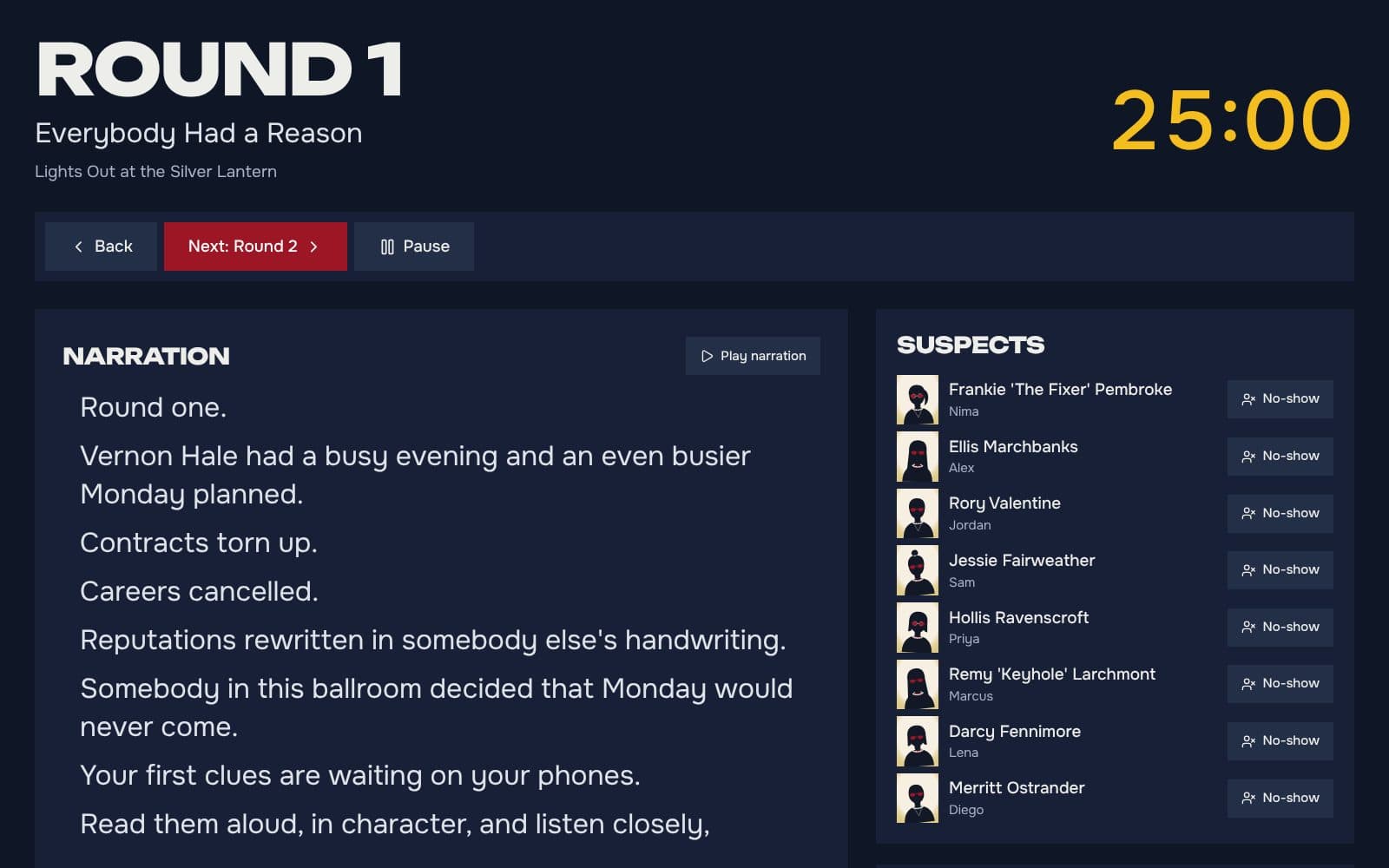
With Killer Cast, the case is written for your team's guest list by AI and checked for fairness, for 6 to 20 players per game. The 90-minute option fits a long lunch or the last stretch of a Friday afternoon, narrator audio with captions plays from the conference room screen, and the interactive Evidence Locker unlocks round by round. Managers can play suspects like everyone else, since nobody, the organizer included, chooses who gets which character or who the killer is. Below are themes that suit the office, a three-week plan, HR-friendly ground rules and answers to the questions organizers ask.
Why it
works
- It's collaboration with a plot. Teams pool clues and test theories, building the habits of a good meeting without anyone calling it one.
- It mixes departments. Every character has reasons to question people the player rarely works with.
- It fits the workday. The 90-minute option runs in a conference room with a screen: no cooking, no costumes required.
- It's inclusive by design. Nobody has to perform, quiet colleagues can win through careful reading, and managers play as suspects like everyone else.
- Budgeting is simple: a one-time $24 for up to 12 players or $39 for up to 20, with no subscription and nothing shipped to the office.
Themes
that fit

Las Vegas Casino Night
Retro and playful, with the easiest optional costumes: a blazer, a visor or sunglasses.

Roaring Twenties Speakeasy
A classic for the company holiday party: suspenders, a feathered headband or a fedora over work clothes.

Old Hollywood Awards Night
The awards finale doubles as team recognition, and the dress code can be as simple as one sparkly accessory.

Wild West Saloon
Low-key and funny, with hats and bandanas that fit in a desk drawer.
Plan
it
3 weeks out
Clear the plan with HR or your manager, book a conference room with a screen and choose the 90-minute game. Send a calendar invite that explains the format in one friendly sentence.
2 weeks out
Lock the participant list (6 to 20 per game) and create the case. Share the free preview of the title and cast in the team channel to build interest.
10 days out
Send private invite pages with characters and costume ideas. Say clearly that costumes are optional, and suggest one accessory over work clothes.
1 week out
Order finger food that needs no forks during play, plus alcohol-free drinks. Test the room's screen and speakers with narrator audio and captions.
3 days out
Check attendance against calendars and re-cast anyone with a conflict for free until 24 hours before.
Event day
Set up 30 minutes early: name tags with character names, chairs facing the screen and a side table for snacks. Start on time and let the narrator run the rounds.
The day after
Post the party recap with awards in the team channel and send a short thank-you to everyone who played.
Make it memorable
- Keep it HR-friendly: PG language, a fictional victim, no jokes about anyone's personal life, and in-jokes limited to harmless work habits, like who always hits reply-all.
- Choose the 90-minute option for a workday event. It fits a long lunch or a 3:30 to 5:00 pm slot without eating into evening plans.
- Turn the conference room into the scene: narrator audio with captions on the main screen, chairs in a loose horseshoe and a side table for snacks.
- Make costumes optional and cheap. A hat, a scarf or a name tag with a character name is plenty over work clothes.
- Break up department clusters. Seat people next to colleagues they rarely work with so the questioning crosses team lines.
- Have managers play, not run. The answer stays hidden from everyone, so leadership can be suspects too and nobody holds an advantage.
- Meetings run over. If someone gets pulled away, their must-share clues move to a colleague who is present, so the case stays solvable.
- Keep drinks optional. The game is just as fun with sparkling water and good snacks, and nobody has to sit out the toast.
Questions
Is a murder mystery appropriate for a work event?
Yes, with a little care. Cases are PG-13 and fictional, nobody is singled out, and in-jokes can stay on harmless work habits. Choose a lighthearted theme, make costumes and drinks optional, and give HR a quick heads-up about the format.
How long does an office murder mystery take?
Choose 90, 120 or 150 minutes. For a workday event, the 90-minute game covers arrival, three clue rounds, accusations, the reveal and awards, which fits a long lunch or the end of an afternoon.
Can we run it in a conference room?
Yes. You need a screen or TV for narrator audio with captions and the Evidence Locker, enough chairs for everyone and a little space to mingle. Nothing needs to be cooked or shipped, and the print-at-home kit is optional.
What if our team is bigger than 20 people?
Each game hosts 6 to 20 players. For a larger team, run two separate parties in two rooms, each with its own case, then compare verdicts over snacks afterward.
Do coworkers have to dress up or act?
No. Costumes are optional, and nobody memorizes lines. Each player reads their character on a private invite page and joins in at their own volume; quiet colleagues often crack the case.
On party
night
Shown with a sample Old Hollywood Awards Night party. A Las Vegas Casino Night case gets its own story, evidence and portraits.
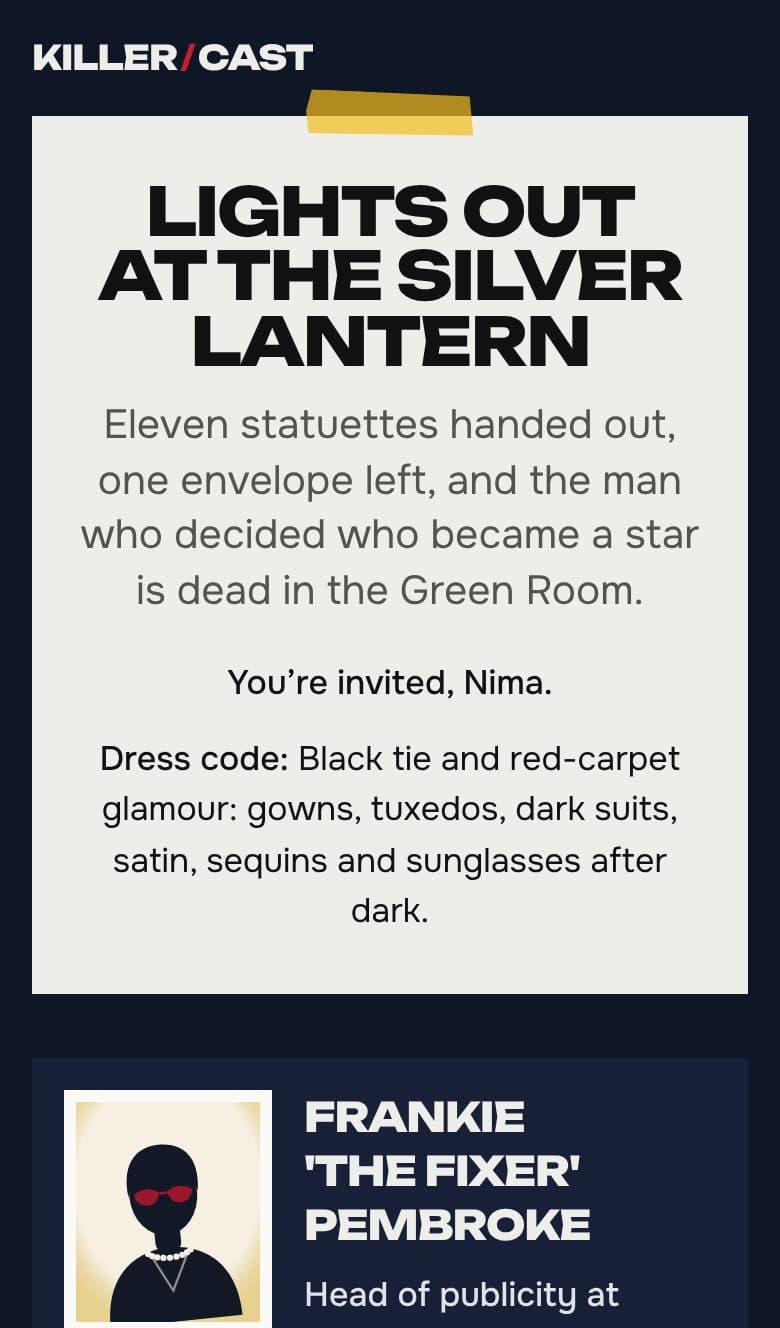
The invite 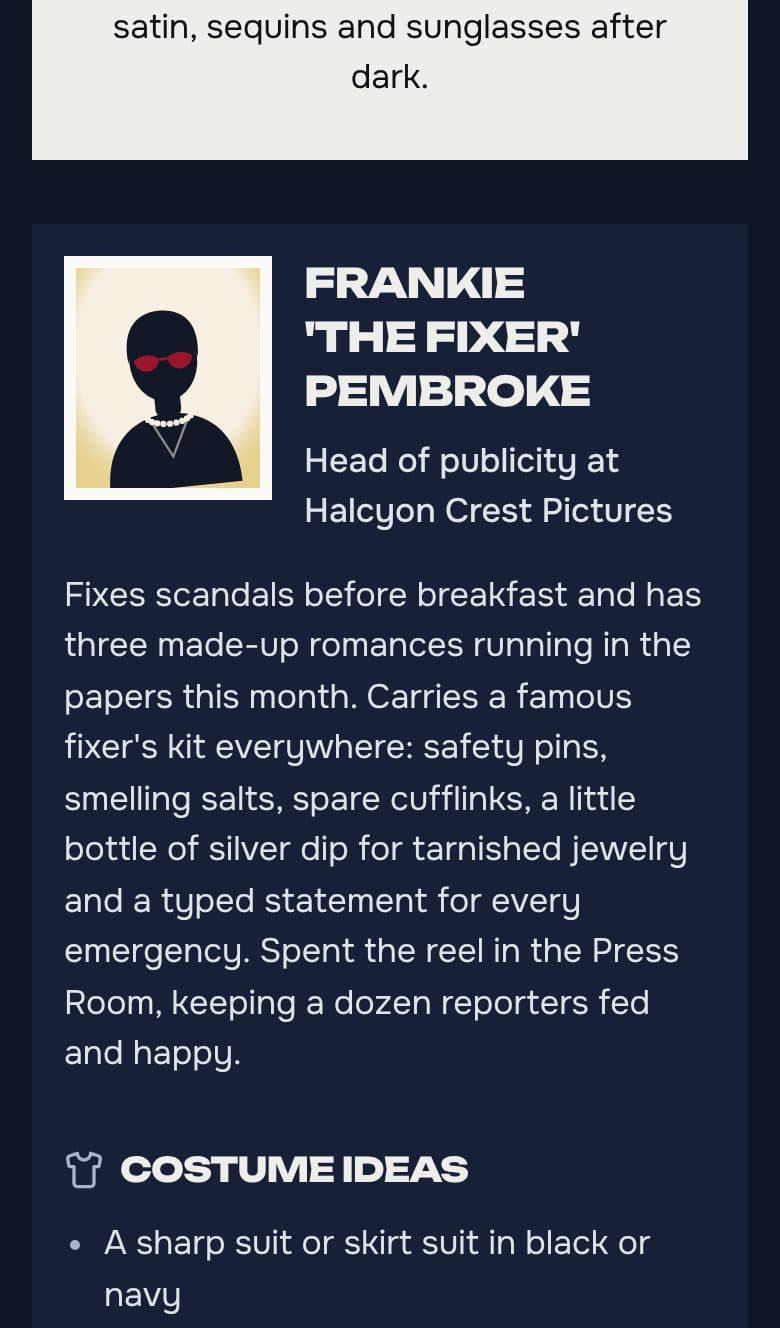
Their part 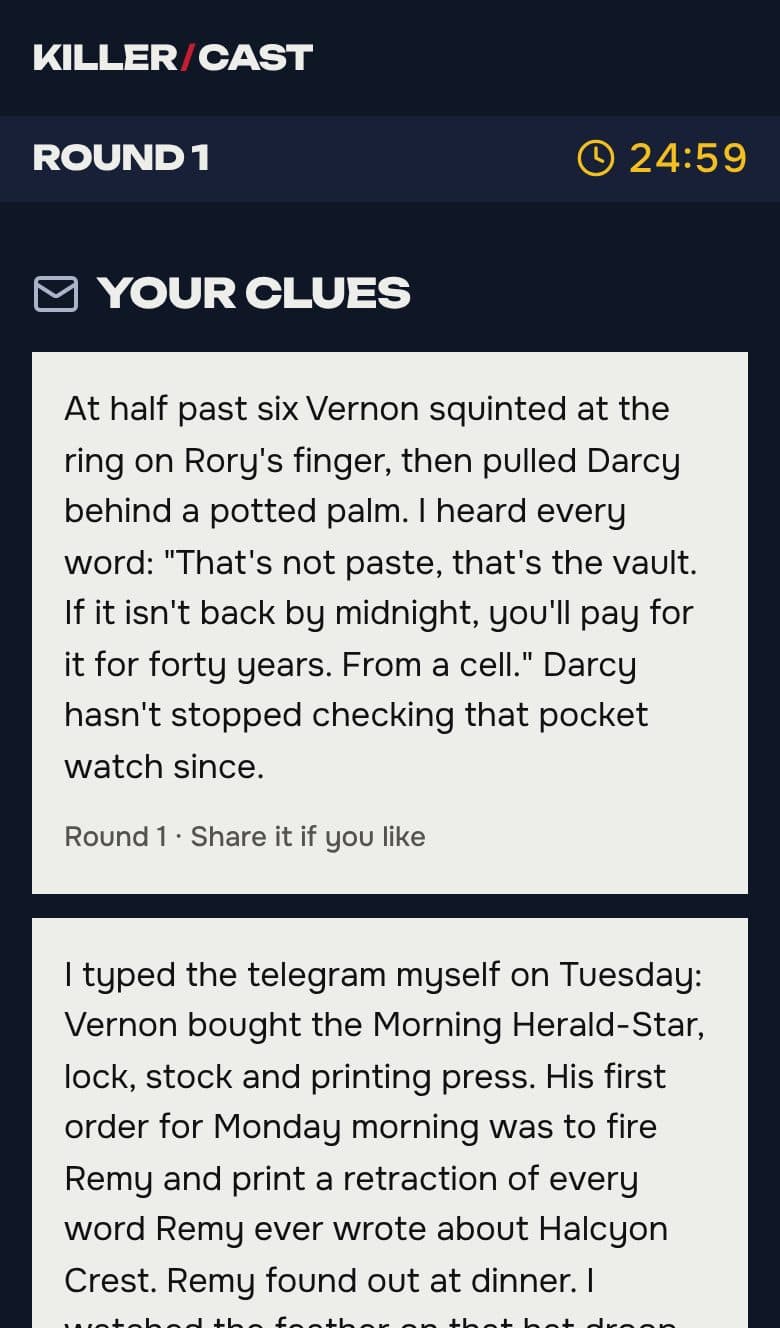
Clues each round 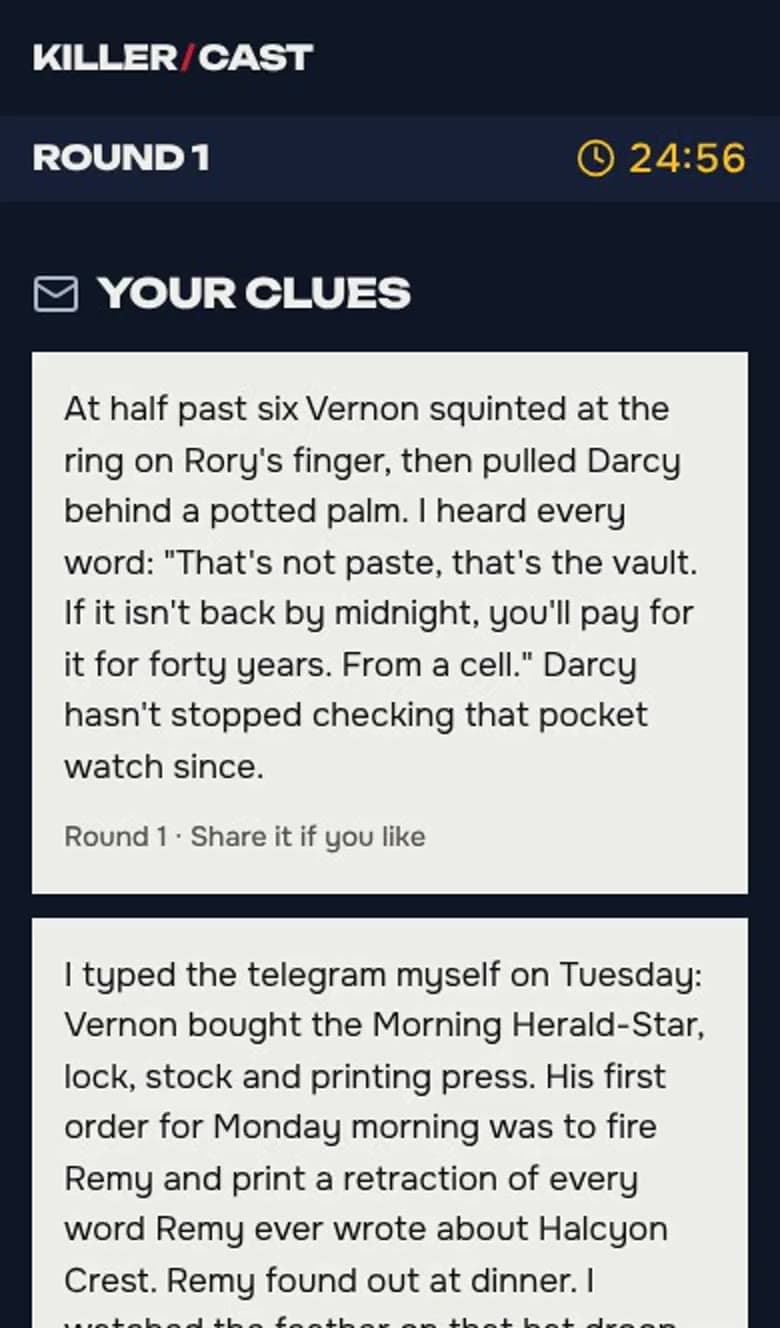
The Evidence Locker
Plan your office party mystery
Pick a theme, add your guest list and see your cast in seconds. The preview is free.