Why shy guests play well
A murder mystery rewards listening. The player who quietly notices that two alibis don't match is often the one who solves the case, while the loudest suspect is busy giving speeches. Shy guests tend to read their clues carefully, remember small details and ask precise questions, and all of that wins games.
The structure helps, too. At an ordinary party you have to invent small talk. Here, every round tells you what to find out and whom to ask. You're never wandering around wondering what to say, because your character already has an agenda.
Low-pressure roles
When casting, hosts can give quieter guests characters whose power comes from what they know, not how much they talk.
Avoid handing shy guests the opening speech, an announcer role, or a character whose secret must be confessed in front of everyone. If you are a shy guest yourself, it is perfectly fine to mention it when you RSVP; most hosts are glad to know.
- The witness: saw something important and only needs to share it when asked.
- The bookkeeper or secretary: holds records and receipts that others need to see.
- The newcomer: just arrived, knows nobody, and can ask everyone simple questions in character.
- The loyal staff member: a butler, deckhand or bartender who notices everything and says little.
- The rival with a grudge: has one strong opinion to repeat, which is easier than improvising.
Lines to borrow
A few ready-made lines take away most of the pressure. These work in almost any theme, and you can write them on the back of your name tag.
- “Where were you when the lights went out?”
- “Funny, that's not what I heard.”
- “I'm not saying it was you. I'm just saying you were there.”
- “I have something you'll want to see, but first, tell me about the victim.”
- “I'd rather not discuss my private business, thank you.”
- “Can we compare notes? I think someone is lying to both of us.”
Use your phone as a script
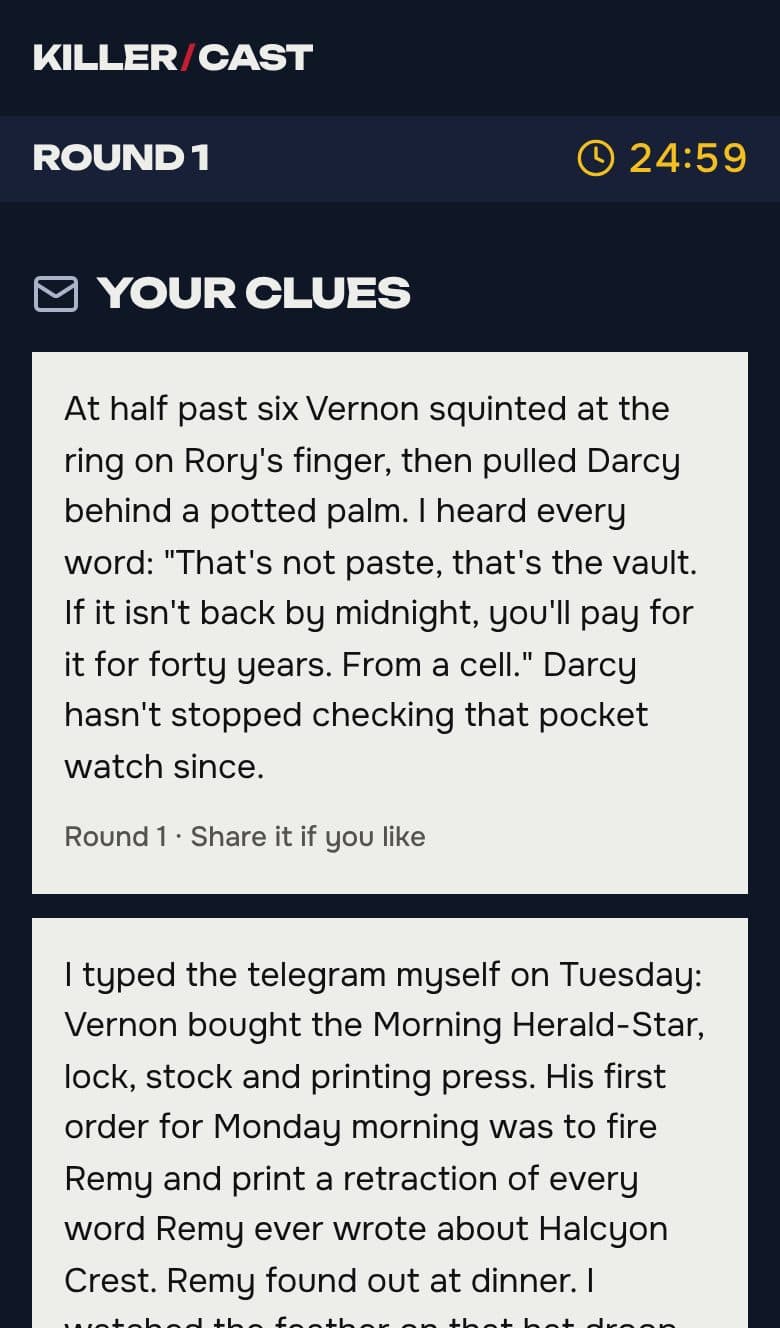
Your character details are a safety net. Keep them open on your phone or printed on a small card in your pocket, and glance at them whenever you lose your place. Nobody minds, because everyone else is doing the same thing.
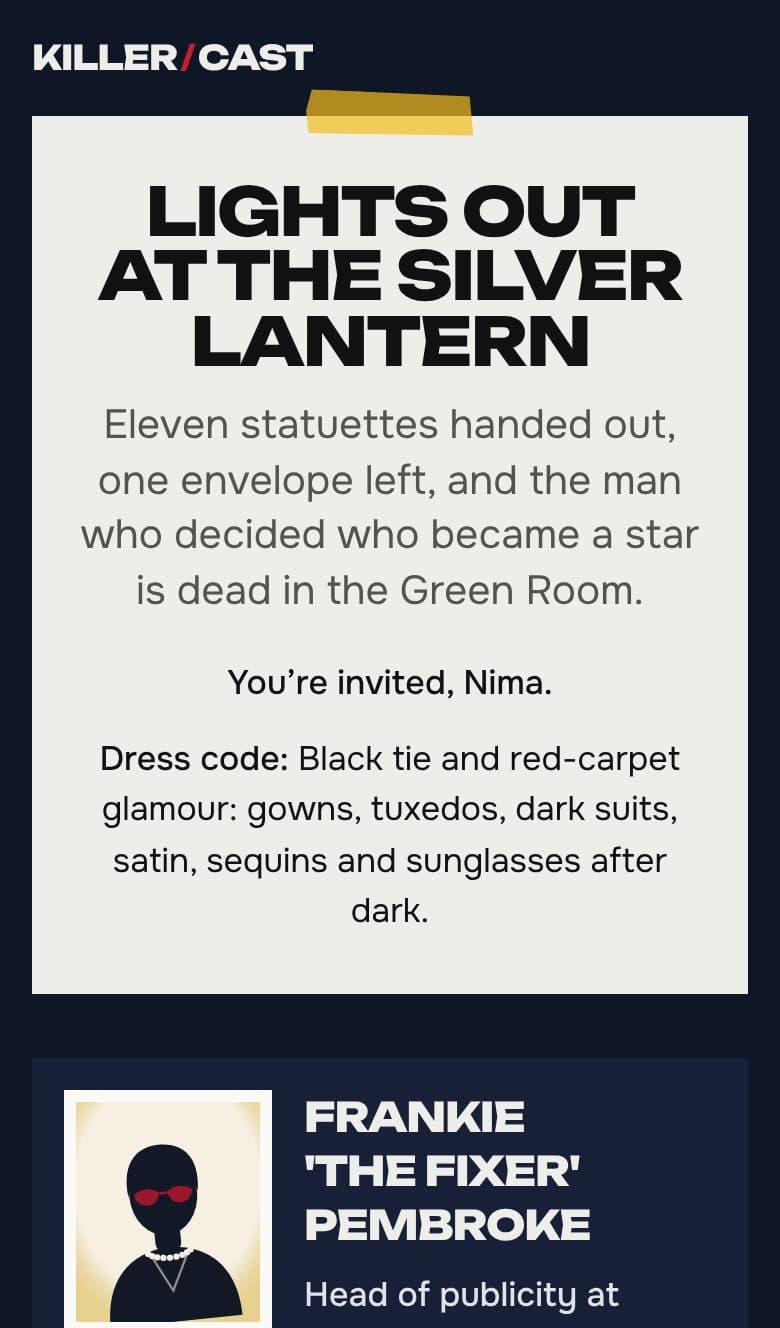
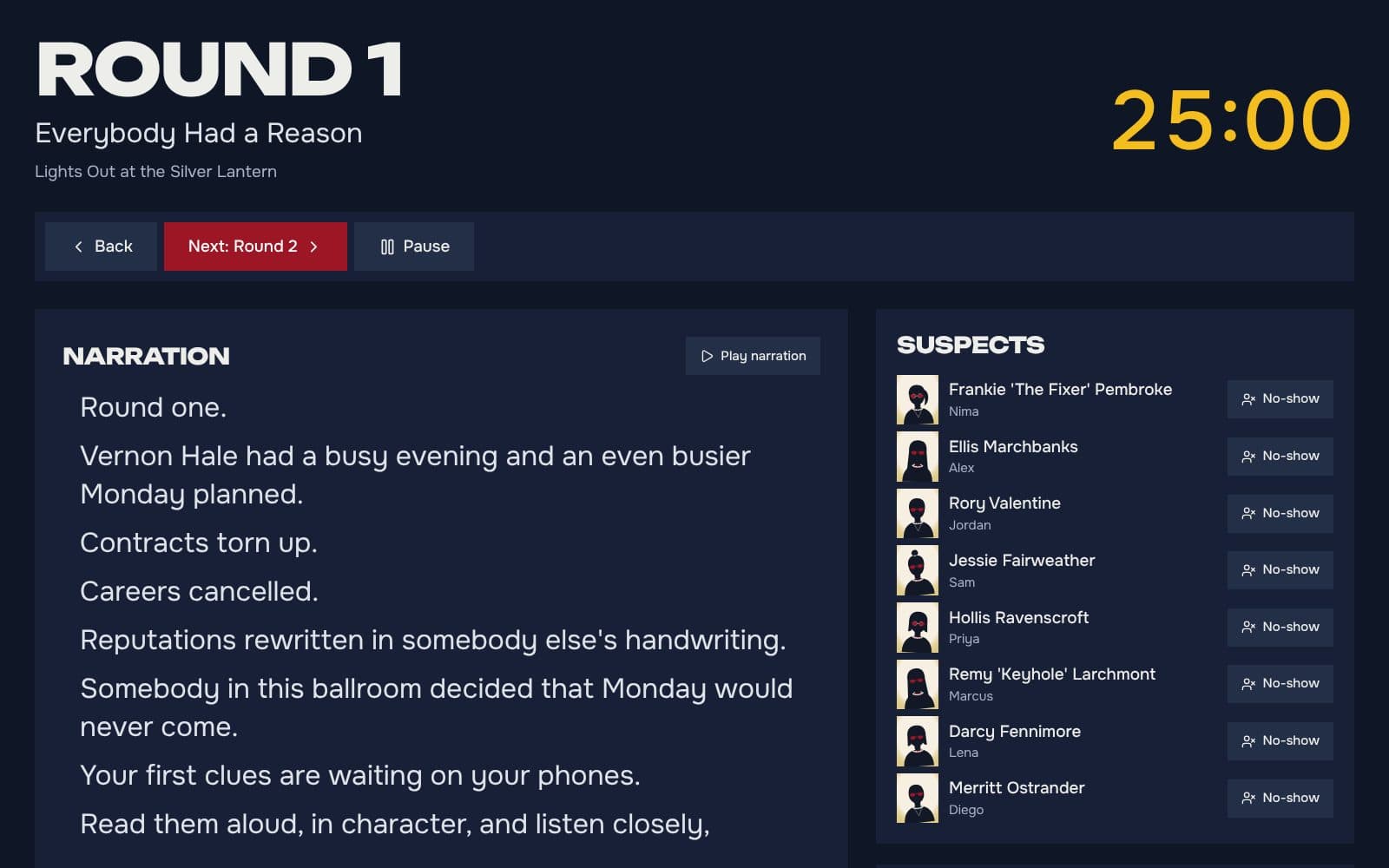
Before the party, read your character twice and pick three things to remember: your character's name, your secret and one question you want to ask someone. That's enough to carry you through the whole night. With Killer Cast, your private invite page keeps your character a tap away, and the narrator, with captions on the shared screen, announces each round, so you're never guessing what happens next.
Taking notes is another great move. A notebook in hand looks like serious detective work, and it gives your hands something to do between conversations.
The buddy system
Pair up with someone you know, ideally a more outgoing friend. Agree before the party that you'll check in with each other between rounds and swap what you've learned. Your buddy can open conversations; you can do the listening and spot the contradictions.
Hosts can build this in on purpose by giving two characters a shared history, such as business partners, cousins or old rivals, so they have a natural reason to stick together. It works especially well at parties of 12 to 20, where small groups form anyway.
Roles that observe
Some guests are happiest watching, and there are plenty of ways to be essential without standing in the spotlight. Offer one of these jobs on top of a character, and the quiet guest becomes the person everyone needs to talk to.
- Timeline keeper: track who was where and when, and share it before accusations.
- Evidence wrangler: pin up clues or manage the red-string board in the Evidence Locker.
- Scribe: collect every accusation and read the tally aloud before the reveal.
- Refiller: keep drinks moving, which gives you a reason to drop into every conversation.
How hosts can help
Small choices by the host make a big difference to how comfortable quiet guests feel.
- Ask about comfort levels privately when you send invitations, not in front of the group.
- Send characters at least five days before the party so quiet guests can prepare.
- Never make anyone give a speech or perform alone.
- Open each round with a clear instruction so nobody has to guess what to do.
- Seat shy guests next to friendly faces at dinner.
- Praise good detective work at the reveal, not just big performances.
Questions
Do I have to act at a murder mystery party?
No. You can play your character in your normal voice and simply share clues and ask questions. Many great players never do an accent all night.
What if I can't think of anything to say?
Ask a question from your objectives or borrow a ready-made line like “Where were you when the lights went out?” Questions keep the other person talking.
Can I just watch?
Everyone plays a character, but you can choose a quiet one and take an observer job like timeline keeper or scribe. Ask the host when you RSVP.
Can a shy person be the killer?
Absolutely. A quiet killer is often the hardest to catch, because nobody suspects the person calmly taking notes in the corner.