Friendsgiving murder mystery
Friendsgiving already has the ingredients of a great mystery: a crowded table, a dozen people with strong opinions and a pie that vanishes before anyone admits to the last slice. Add a plot and you get the dinner people talk about until next November. Every guest plays a suspect, a fictional victim meets a dramatic end between the appetizers and the main course, and the table spends the evening trading clues instead of debating whose stuffing recipe deserves the crown.
The format fits a potluck surprisingly well. Courses become natural round breaks: mingle over appetizers in round one, compare alibis at the table during the main course, then pass the pie and point fingers in round three. Nobody needs to act or memorize lines, and the guests who came for the food alone end up arguing motive like seasoned detectives. It also gives a mixed table of roommates, coworkers, partners and friends-of-friends a shared puzzle, which beats another round of small talk about holiday travel.
With Killer Cast, you type in your guest list and get a custom case written for that group by AI and checked for fairness, for 6 to 20 players. It's 100% digital, so nothing has to ship during the busiest delivery weeks of the year, and the host can play a suspect rather than run the game from the kitchen. Below: themes that suit an autumn table, a three-week plan built around a potluck, timing for a 120-minute dinner game, and answers to the questions Friendsgiving hosts ask.
Why it
works
- Courses make natural round breaks. Appetizers, the main course and pie line up neatly with three clue rounds, so the game and the meal pace each other.
- It gives a mixed table something to talk about. Roommates, coworkers and partners who see each other once a year get a shared puzzle instead of small talk.
- The host gets to sit down. Narrator audio with captions runs each round from a TV, laptop or phone, so you're not reading scripts while the gravy thickens.
- Holiday travel is covered. Re-casting is free until 24 hours before, and on the night a no-show's must-share clues move to someone who is present.
Themes
that fit

Wild West Saloon
Cowboy hats, flannel and a rustic table: harvest season and a frontier saloon were made for each other.

Haunted Mansion
Candlelight and creaking doors suit a dark November evening, spooky rather than scary.

Roaring Twenties Speakeasy
A dressier option for friends who treat Friendsgiving as their big night out of the season.
Plan
it
3 weeks out
Set the date (the weekend before Thanksgiving dodges most travel), choose the theme and a 120-minute game, and send invitations with an RSVP date.
2 weeks out
Lock the guest list and create the case. Start a potluck sign-up sheet so you don't end up with five bowls of mac and cheese.
10 days out
Send private invite pages with characters and costume ideas. Suggest each guest bring a dish their character might make; a saloon cook's chili beats another bag of rolls.
1 week out
Map the meal: which course lands in which round, and which dishes need the oven when. Test narrator audio from the far end of the table.
3 days out
Confirm guests and dishes. Re-cast any dropouts for free until 24 hours before. Print the optional at-home kit if you want place cards with character names.
Party day
Set the table with name cards, keep appetizers out for arrivals, and line the courses up with the rounds: main course for round two, pie for round three.
The day after
Share the party recap and awards in the group chat, along with a fair plan for the leftovers.
Make it memorable
- Give pie a starring role. Hold dessert until round three so it arrives just as the most damning evidence does.
- Mix up the seating. Put people who already know each other at opposite ends of the table so round two forces new conversations.
- Keep the oven schedule simple. Anything that needs attention during the rounds belongs to a co-host or a guest who doesn't mind stepping away.
- Label every potluck dish with its maker's character name. It's a free prop and helps everyone learn who's who.
- Clear the plates before accusations so everyone can turn toward the screen for the reveal.
- Use fictional scandals to keep things friendly. Holiday tables can drift toward touchy topics; a murder mystery gives everyone a better argument to have.
- For a big group of 15 to 20, choose the 150-minute game and serve the meal buffet-style so the food never stalls the plot.
Questions
What time should a Friendsgiving murder mystery start?
Invite guests for 6:00 pm and start the opening scene by 6:20. A 120-minute game covers arrival, three rounds, accusations, the reveal and awards, so you'll wrap around 8:00 with pie and coffee still on the table.
Does a murder mystery work as a potluck?
Very well. Courses line up with the rounds, and guests can bring a dish their character might make. Ask everyone to label their dish with their character name; it doubles as a prop and helps people learn who's who.
Can the host play while cooking?
Yes. The solution stays hidden from the host, so you can play a suspect. Do the heavy cooking before guests arrive and hand oven duty to a co-host during the rounds.
How much does a Friendsgiving murder mystery cost?
$24 for up to 12 guests or $39 for up to 20, paid once with no subscription. A free preview shows the case title and cast before you pay.
What if a guest gets stuck in holiday travel?
Re-cast for free until 24 hours before the party. If someone doesn't make it on the night, their must-share clues move to a guest who is present, so the case stays solvable. Two standby characters cover surprise arrivals.
On party
night
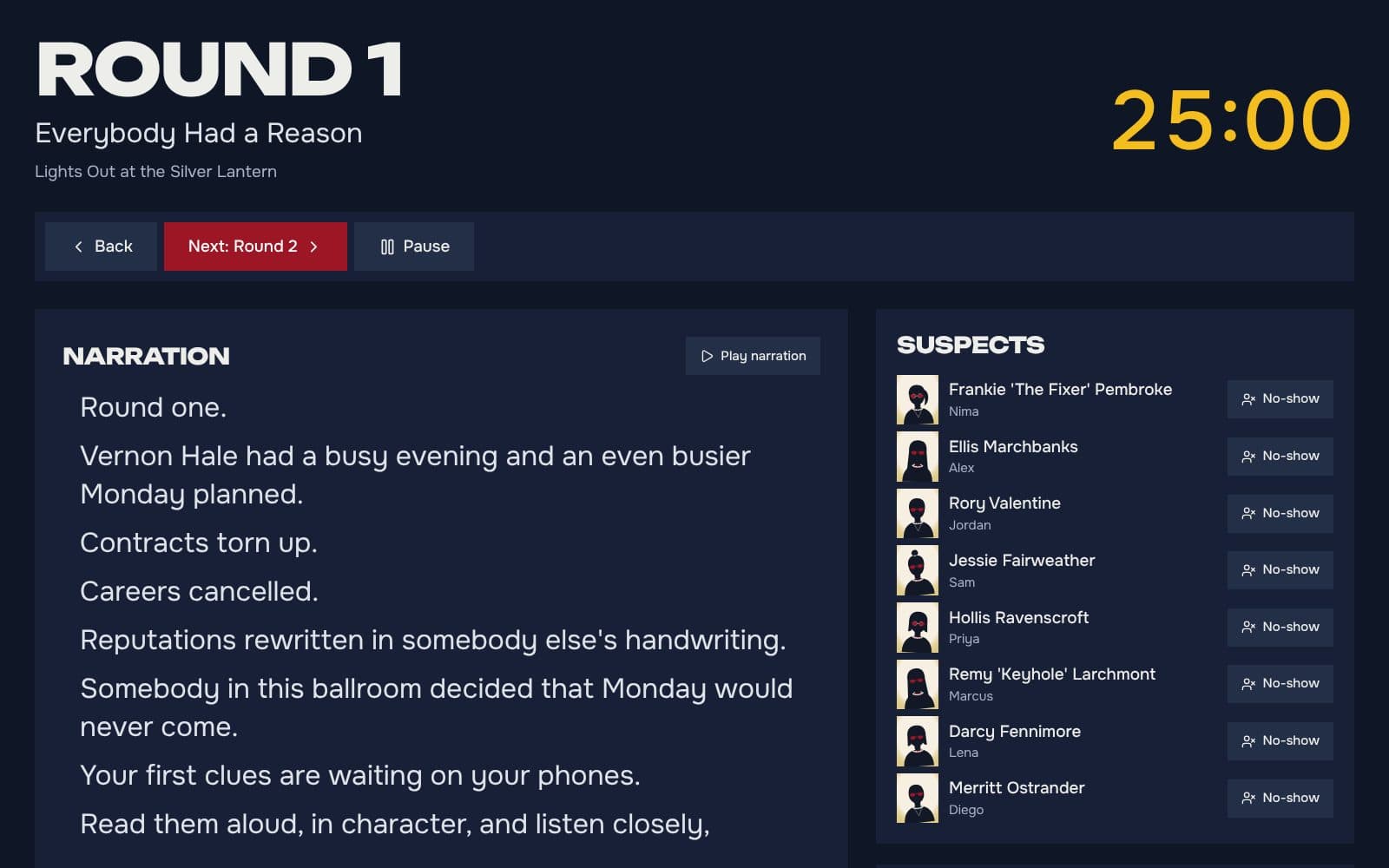
Shown with a sample Old Hollywood Awards Night party. A Wild West Saloon case gets its own story, evidence and portraits.
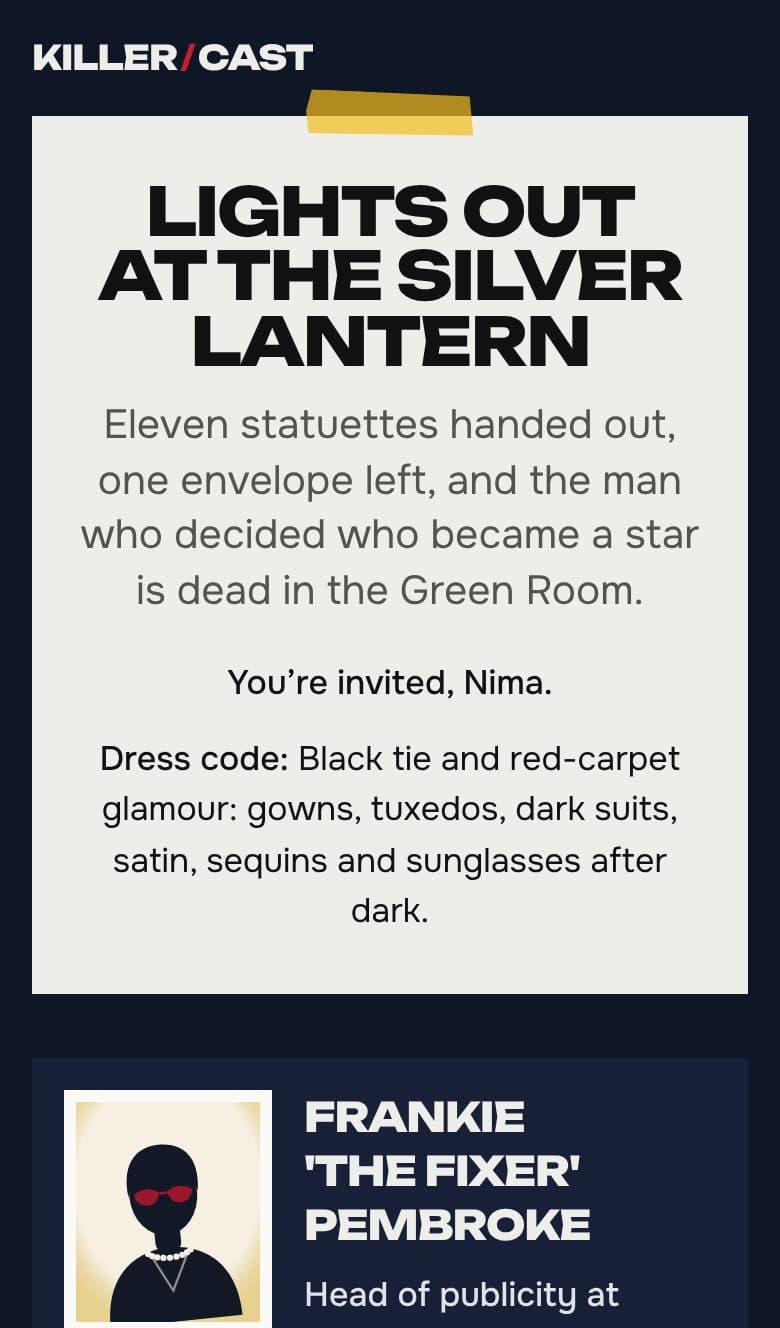
The invite 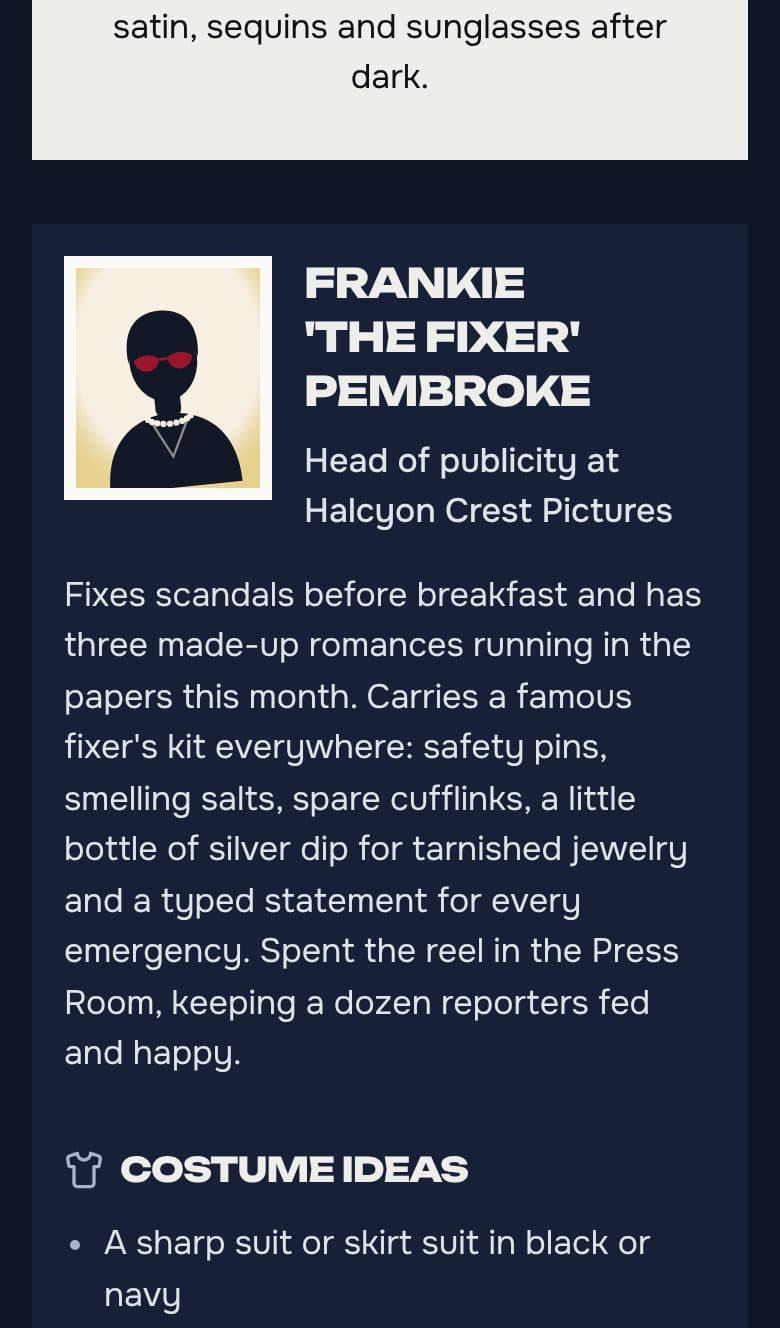
Their part 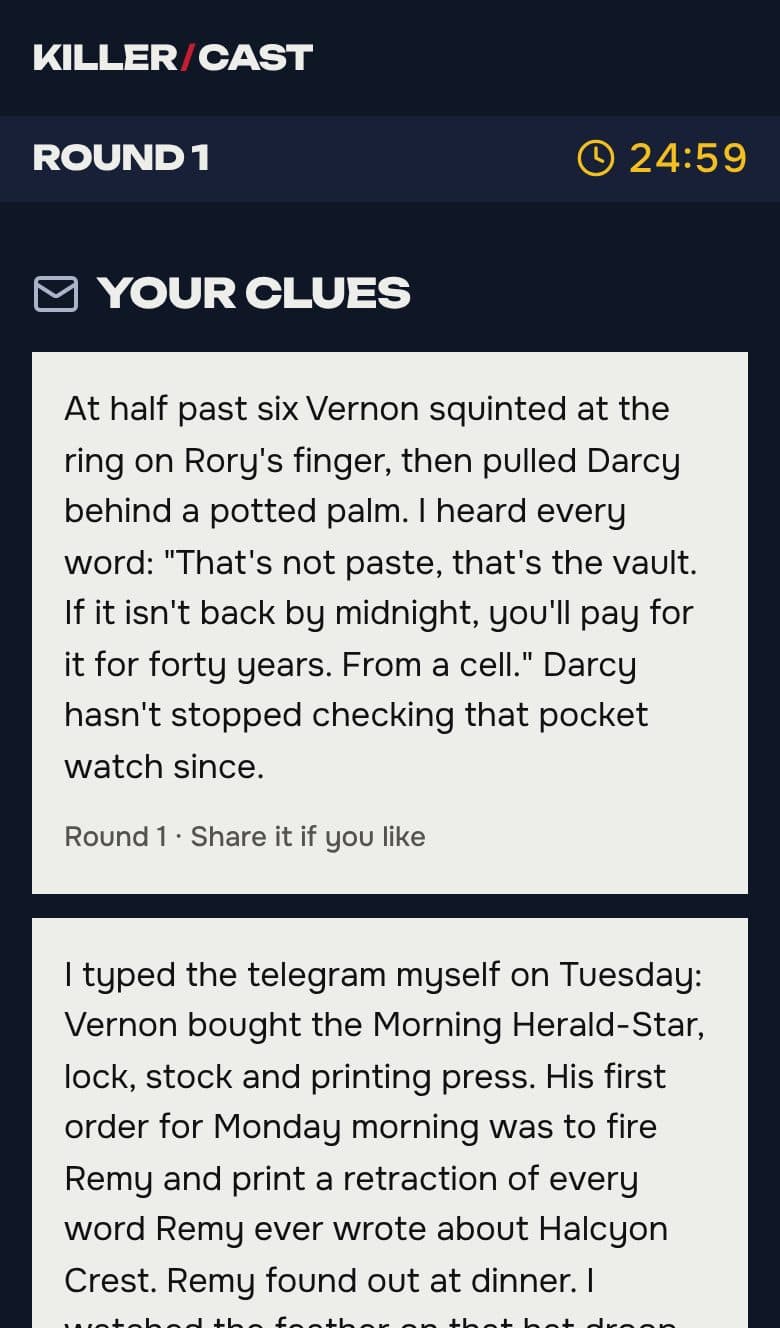
Clues each round 
The Evidence Locker
Plan your friendsgiving mystery
Pick a theme, add your guest list and see your cast in seconds. The preview is free.