A serving style that fits
Plated, multi-course dinners look great but pull the host away at the worst moments. For most groups, one of these styles works better.
Whatever you choose, make sure everything can be eaten with one hand or with a fork while standing. Nobody wants to saw through a steak while defending an alibi.
- Grazing table or buffet: everything out at once and refreshed between rounds. Best for 12 or more guests and for hosts who are also playing.
- Family-style main: one big shared dish on the table during round two, with appetizers before and dessert after. It feels like a dinner party without the plating.
- Passed bites only: small plates in waves, one per round. Ideal for cocktail-style themes such as a masquerade or a casino night.
A make-ahead plan
Aim to have 80 percent of the food done before the doorbell rings. This schedule works for a party that starts at 6 p.m.
- Two days before: shop, bake desserts that keep (cakes, cobblers, cookies), and make sauces and dips.
- The day before: chop vegetables, assemble casseroles or chili, marinate proteins, and set out serving dishes with sticky notes naming what goes in each.
- Morning of: bake bread, build the grazing board minus soft cheeses, and chill the drinks.
- One hour before: put the main in a low oven or slow cooker, finish the board and fill the ice bucket.
- During the party: only reheat and refill. If a dish needs more than five minutes of attention, it doesn't belong on this menu.
Serving around the rounds
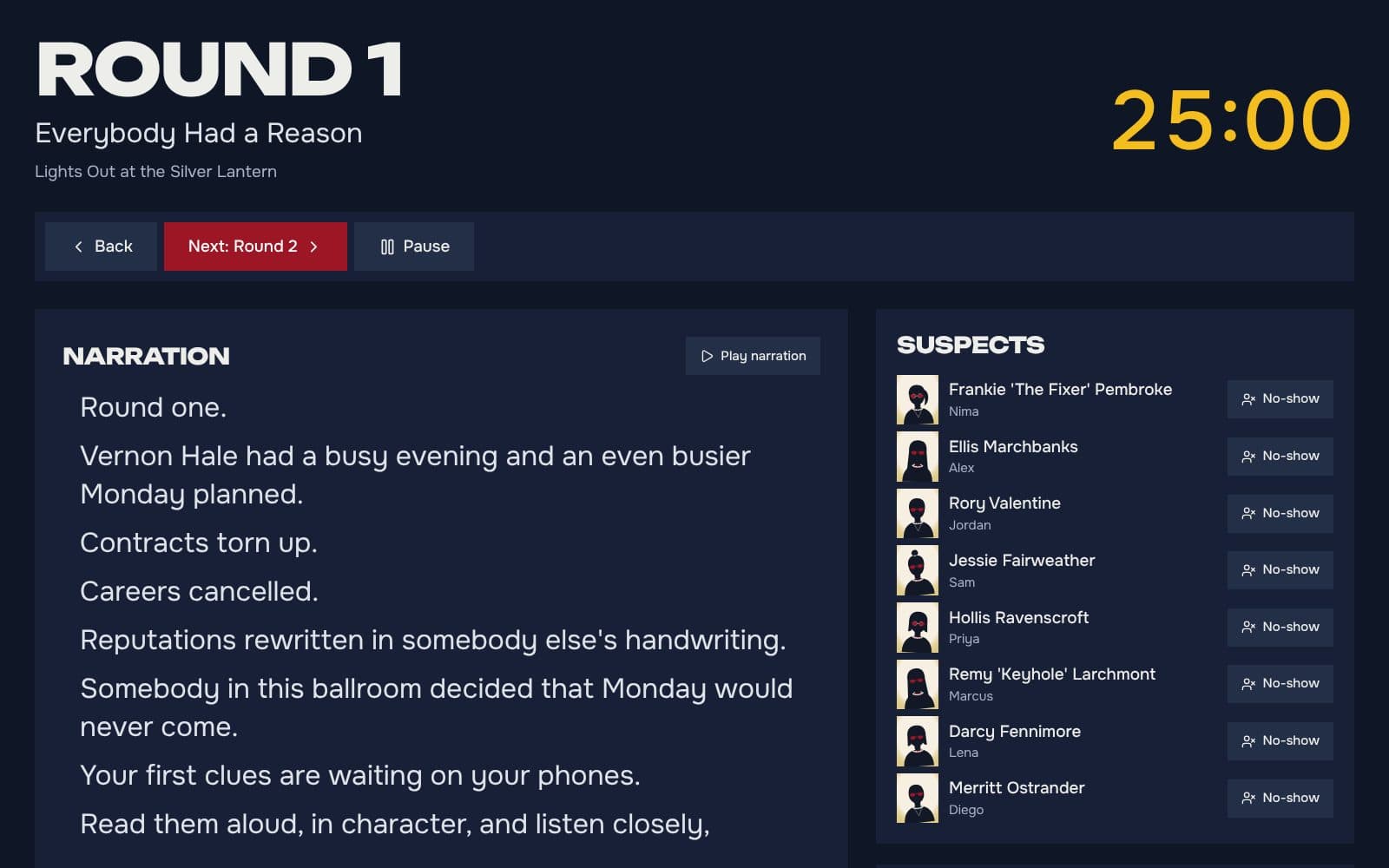
Map courses to the game so food fills the natural lulls. In a 120-minute night with three rounds, this rhythm works well.
Ask a reliable friend to be the official refiller. It's a great low-key job for a guest who doesn't want a big role, and it keeps you free to run the game.
- Arrival: drinks and one or two easy appetizers.
- Round one: keep snacks within reach and let people graze while they question each other.
- Round two: serve the main course. Sitting down together gets everyone talking and slows the pace in a good way.
- Round three: clear plates quickly so the table is free for evidence.
- Reveal and awards: dessert and coffee, so the big moment ends on a sweet note.
Drinks, with alcohol-free options
Pick one signature drink per theme, batch it in a pitcher, and offer an alcohol-free version that looks just as festive in the same glass, so nobody has to explain their choice.
Keep water easy to find, and plan on about a drink and a half per guest per hour across all options.
- Speakeasy: a gin and lemon punch, or sparkling lemonade with a rosemary sprig, both served in teacups.
- Old Hollywood or masquerade: sparkling wine, or sparkling white grape juice with a sugared rim.
- Wild West: whiskey sours, or iced tea with lemon and a splash of ginger ale.
- Pirate Ship: rum punch, or a pineapple, orange and lime punch with a cinnamon stick.
- Haunted Mansion or Victorian Christmas: mulled wine, or mulled apple cider kept warm in a slow cooker.
- Vegas Casino: a classic highball, or a cranberry and lime spritz over plenty of ice.
Dietary needs without the drama
Ask about allergies and food preferences with the RSVP, not on the night. Then build the menu so at least half the dishes work for almost everyone: a vegetarian main, a gluten-free side and a nut-free dessert cover most groups.
Write the menu before the shopping list, then check every dish against your RSVPs once. Ten minutes of planning saves an awkward moment at the buffet.
- Label every dish with a small card. Theme it if you like: “Exhibit C: Smoky Chili (contains dairy).”
- Keep allergy-safe food on its own plate with its own serving spoon.
- Serve sauces, cheese and dressings on the side so guests can build their own plates.
- Check store-bought items for hidden nuts, gluten and dairy.
Questions
Does a murder mystery party need a full dinner?
No. Hearty appetizers and a dessert work well, especially for cocktail-style themes. If the party runs over a mealtime, though, guests will expect something filling during round two.
How much food do I need?
For a full dinner, plan on one main portion per guest plus about four appetizer bites each. For appetizers only, plan on 10 to 12 bites per guest over the evening.
Can guests bring dishes?
Yes. A themed potluck works nicely: assign each guest a course and suggest a dish that fits the theme. Just collect allergy information first so you can label everything.
When should dessert be served?
During the reveal and awards. It gives everyone a reason to gather in one room and ends the night on a high note.