Book club murder mystery night
Your book club has spent years discussing unreliable narrators, suspicious inheritances and characters with something to hide. A murder mystery night lets the club step inside the story for once. Every member plays a suspect, a fictional victim meets a dramatic end in the opening scene, and the group spends the evening doing what it already does well: reading closely, debating motive and pointing out the detail everyone else skimmed. Swap one month's novel for a case, and the club finally gets to argue about a plot it lived through.
It's a natural fit for a reading crowd. The evidence rewards careful attention: letters with a telling turn of phrase, receipts with times that don't add up, a timeline that falls apart the moment one alibi is false. Members who rarely speak up in discussion often shine here, because a sharp observation counts for more than a loud voice. And since the meeting already has a host, a living room and a standing date, most of the planning is done before you start. Think of it as a month off from the reading list that still gives everyone plenty to talk about.
With Killer Cast, the case is written for your club's member list by AI and checked for fairness, for 6 to 20 players, and the host can play rather than run things. Most clubs fall in the 6-to-12 range, which fits the $24 Party tier. On a weeknight, the 90-minute game fits inside a normal meeting slot, and narrator audio with captions keeps every round moving without anyone reading aloud from a script. Below are themes with a literary flavor, a three-week plan, tips for running it like a discussion night, and answers to the questions clubs ask most.
Why it
works
- It rewards close reading. Letters, clippings, receipts and a timeline in the Evidence Locker favor the members who notice small details.
- Quiet members get a fair shot. Deduction counts more than performance, and nobody has to act or memorize lines.
- It fits the meeting you already have: same night, same living room, and the 90-minute game leaves time for snacks and next month's pick.
- It ends in the kind of discussion your club is built for. The party recap lays out the solution and the awards, so you can debate which clues really mattered.
Themes
that fit

Victorian Christmas Manor
Candlelit parlors, sealed letters and a family fortune feel like stepping into a classic novel.

Haunted Mansion
A gothic house with creaking doors suits clubs that love an atmospheric read, spooky but PG-13.

Roaring Twenties Speakeasy
Jazz-age glamour and secrets behind a hidden door for clubs that love a period piece.

Old Hollywood Awards Night
Studio rivalries and a backstage scandal for members who devour glamorous page-turners.
Plan
it
3 weeks out
Announce the mystery in place of the next book, choose the theme and the 90-minute game, and confirm who's in. Six to 12 players fits the Party tier ($24).
2 weeks out
Create the case and share the free preview of the title and cast in the club chat as this month's reading list.
10 days out
Send private invite pages with characters and costume ideas. Make costumes optional; a hat, a scarf or a pair of reading glasses is plenty for a weeknight.
1 week out
Plan one-handed snacks so nobody juggles a plate while studying evidence. Test narrator audio and captions on the TV or laptop.
3 days out
Confirm attendance and re-cast anyone who can't come for free until 24 hours before.
Meeting night
Start promptly, run three rounds, collect written accusations, then reveal. Leave 15 minutes after the awards to discuss the clue trail the way you'd discuss a book.
The day after
Share the party recap and choose next month's book, ideally a mystery while everyone's deductive muscles are warm.
Make it memorable
- Treat the invite page as this month's assigned reading. Ask members to read their character before the meeting so round one starts quickly.
- Hand out notebooks and pens. Readers who annotate will fill pages, and written accusations stop everyone from copying the loudest theory.
- Work the evidence like a text. Have one member track the timeline while others pin connections on the red-string board, then swap jobs each round.
- Choose the 90-minute game on a weeknight and save 120 minutes for a weekend meeting with dinner.
- Run the post-reveal like a discussion: which clue was the red herring, which detail gave it away, and who told the most convincing lie?
- Keep your usual club etiquette: one conversation at a time during accusations, and everyone gets a turn to make their case.
- Bringing a guest this month? Two standby characters are kept ready for surprise arrivals.
Questions
Do book club members need to prepare?
Very little. Each member reads their private invite page, with their character and costume ideas, before the meeting. There are no lines to memorize and no rulebook to study.
Is a murder mystery a good fit for a small book club?
Yes, as long as at least 6 people can play. Six to 8 players gives everyone plenty to say, and the Party tier ($24) covers up to 12.
How long does a book club murder mystery take?
Choose 90, 120 or 150 minutes. On a weeknight, the 90-minute game fits a typical meeting with a little time left over for discussion.
Can the member hosting the meeting play?
Yes. The solution stays hidden from the host, so whoever hosts can play a suspect alongside everyone else.
Will the case be too graphic for our group?
No. Cases are PG-13: clever and dramatic, with a fictional victim and nothing graphic. Think of a classic mystery novel rather than a crime documentary.
On party
night
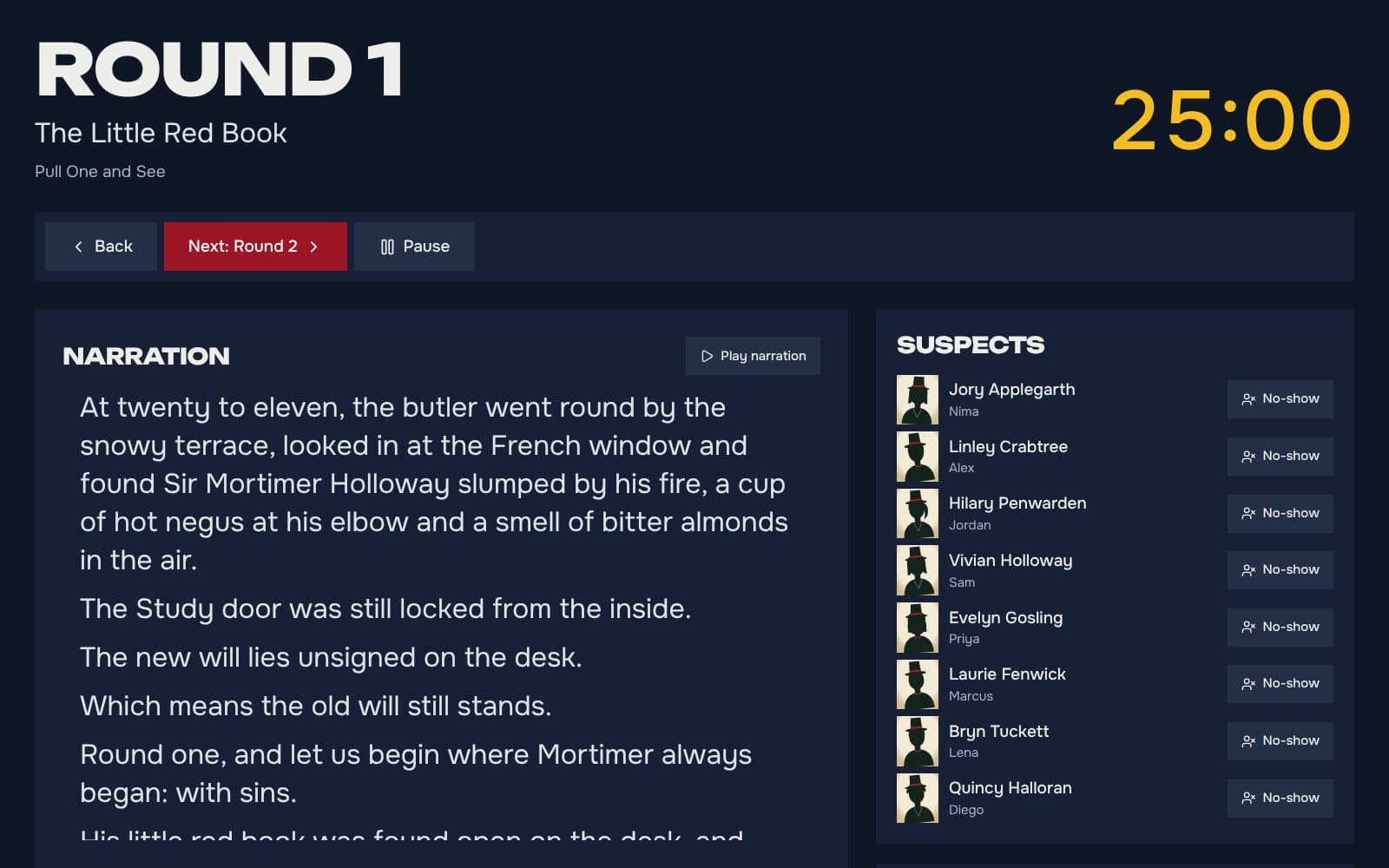
The real screens from a sample Victorian Christmas Manor party. Your guests get their own, written around your list.
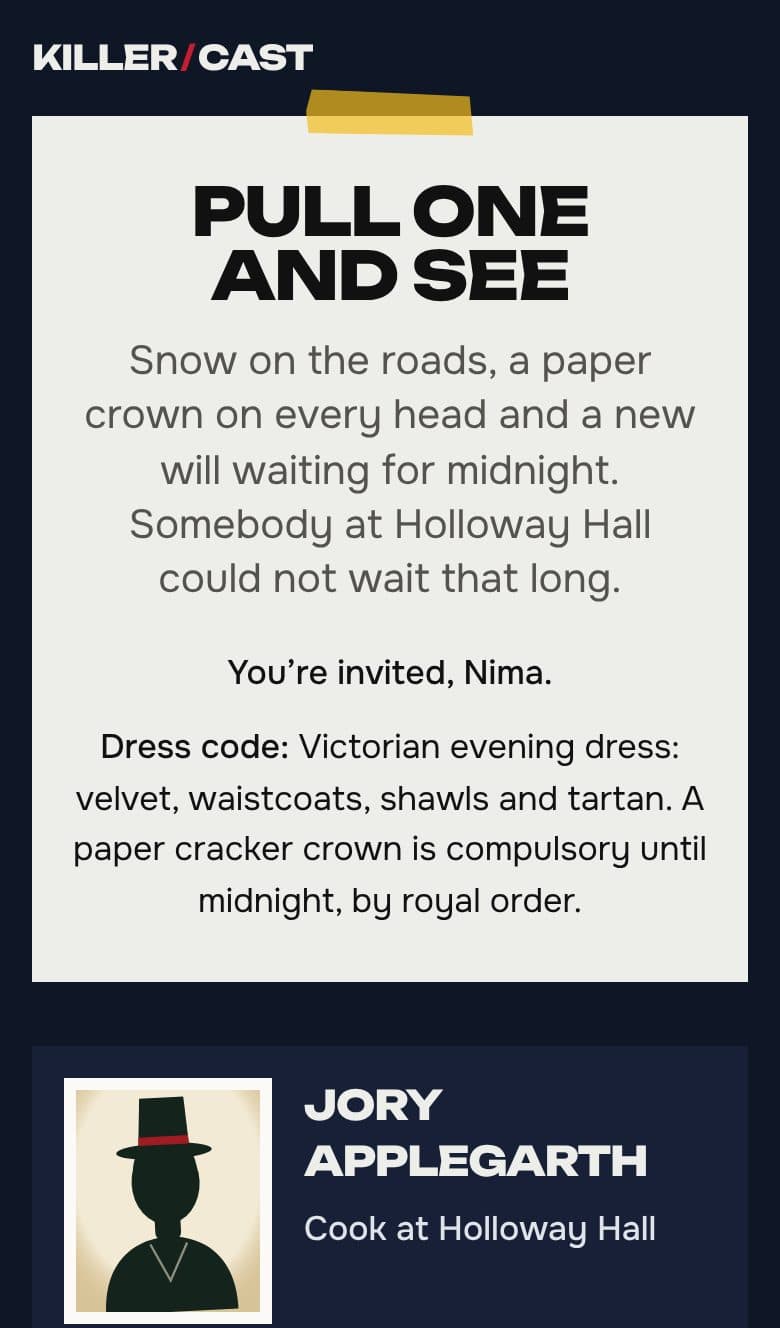
The invite 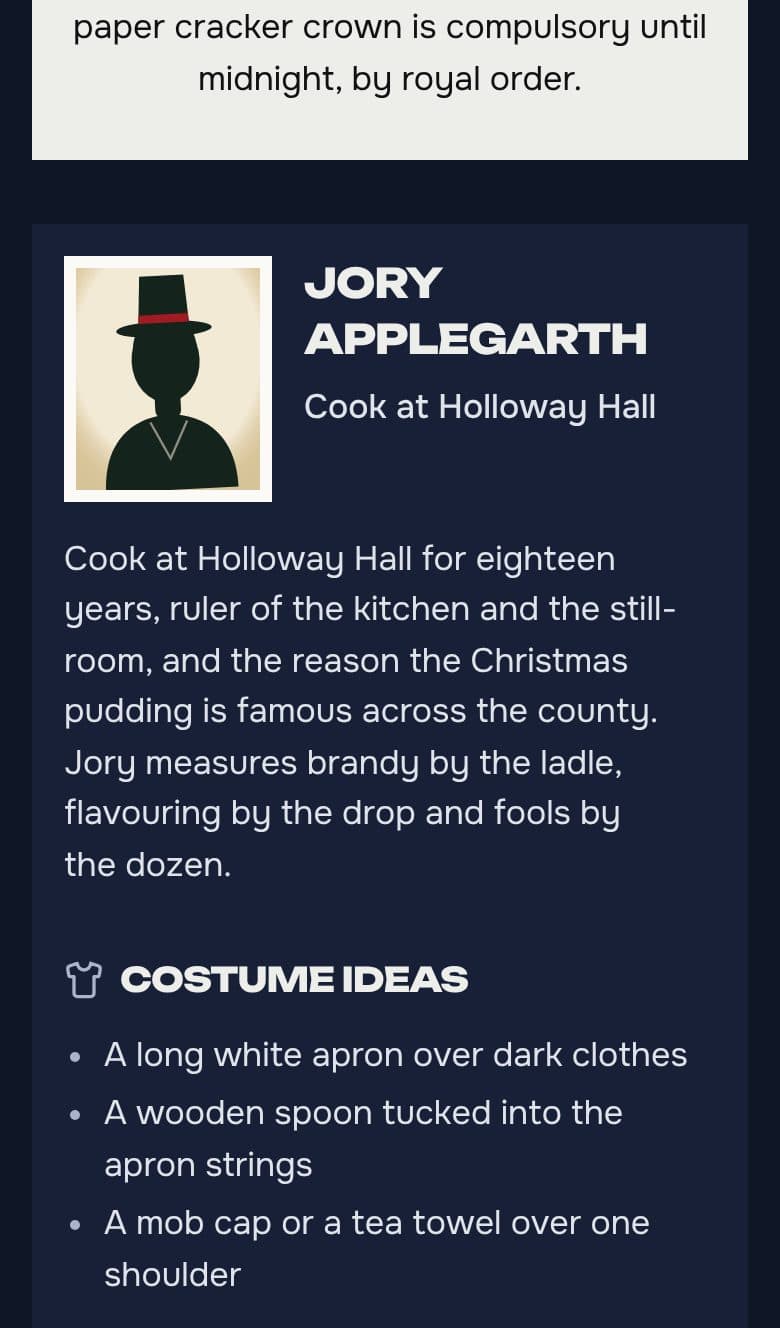
Their part 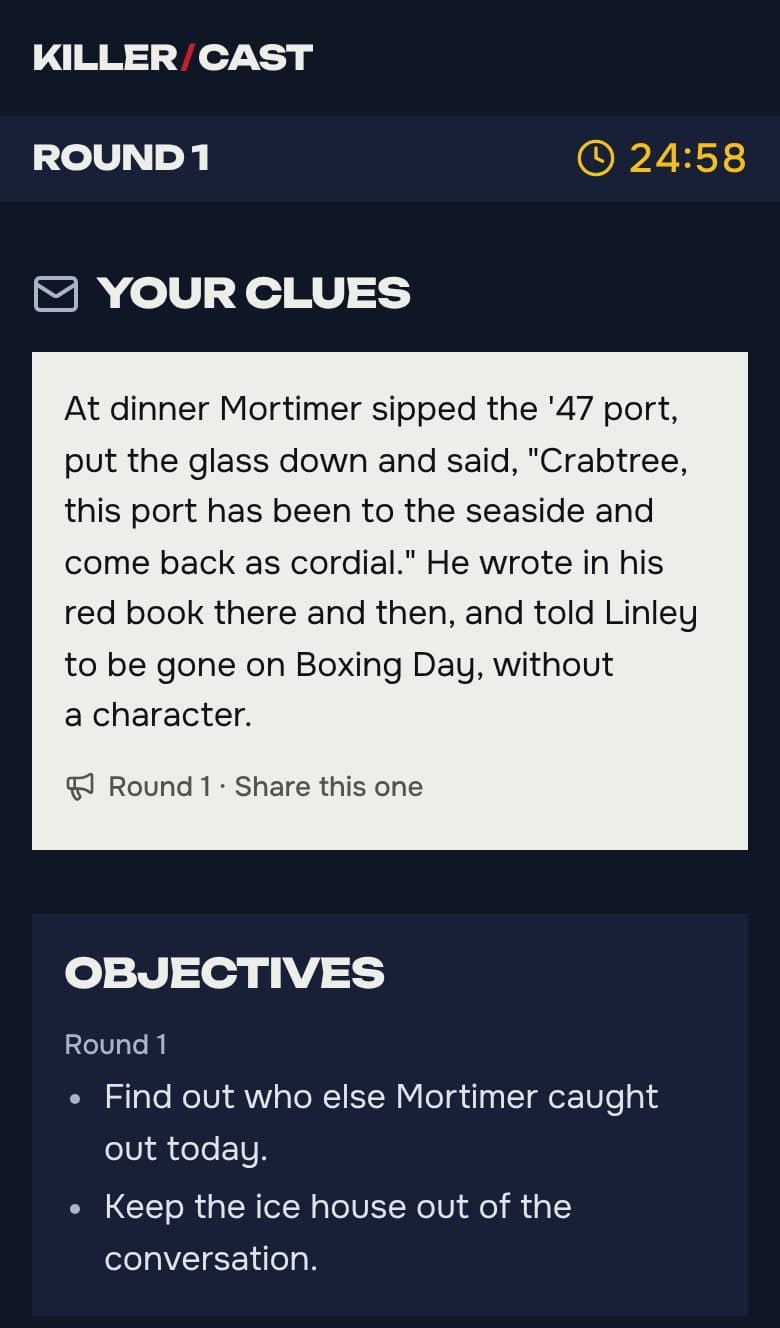
Clues each round 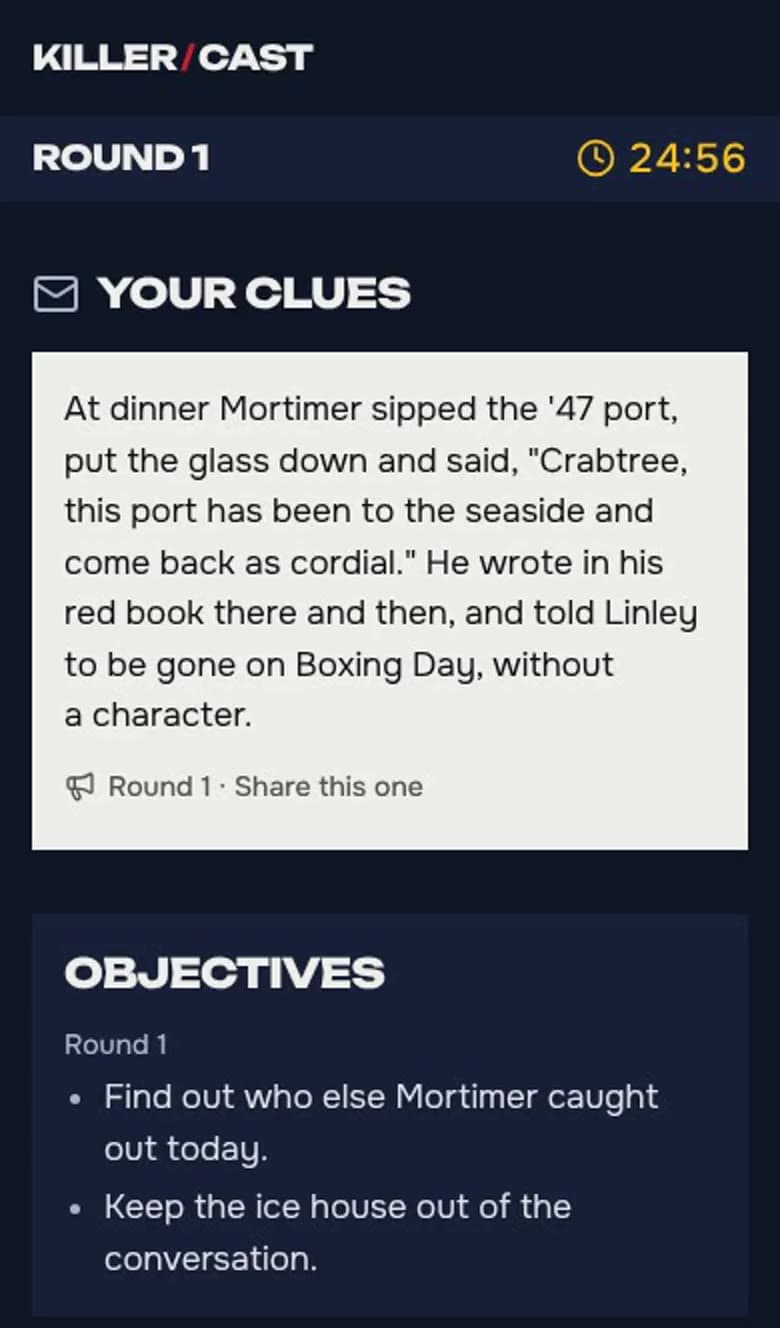
The Evidence Locker
Plan your book club mystery
Pick a theme, add your guest list and see your cast in seconds. The preview is free.