The three-piece formula
Almost every great costume has three pieces: one base garment that sets the era, one accessory that signals the role, and one prop to hold. A vest, a press card and a notebook make a 1920s reporter. A long coat, a tricorn hat and a rolled paper map make a ship's captain. Guests who follow this formula look intentional without trying very hard.
Encourage people to build from their own wardrobe first. Black, white, cream and navy basics work across nearly every theme, so the money goes on the one piece that says “this character.”
Glamour themes
These four themes reward sparkle and tailoring. Anything already in your closet for weddings or formal events is a strong starting point.
- Roaring Twenties Speakeasy: drop-waist or fringed dresses, long faux pearls and a feathered headband; pinstripe vests, suspenders, a flat cap or fedora and two-tone shoes (white tape over black shoes works). Props: a teacup for bathtub gin, a ledger, a deck of cards.
- Old Hollywood Awards Night: satin or velvet gowns, faux fur stoles, long gloves and red lipstick; dark suits or tuxedos, bow ties and slicked-back hair. Big sunglasses say “star in hiding.” Props: an autograph book, a gold-sprayed statuette, a cardboard clapperboard.
- New Year's Eve Masquerade Gala: any formal outfit plus a mask. Sequins, metallics and velvet all fit. A mask on a stick is easier to talk in than a full face mask. Props: a noisemaker, a flute of sparkling cider, a pocket watch counting down to midnight.
- Las Vegas Casino Night (1970s): wide collars, patterned shirts, gold chains and tinted aviators; sequined dresses, big hair and feather boas. A dealer needs a vest, a bow tie and a visor. Props: poker chips, dice, a stack of play money.
Atmosphere themes
These themes are about texture and mood more than glamour, which makes them friendly to thrift-store finds and costume skeptics.
- Wild West Saloon: denim, plaid, a bandana and boots; long skirts, shawls and lace collars. A cardboard-and-foil star makes a sheriff, and an apron with a bar towel makes a bartender. Props: a wanted poster, a deck of cards, a pocket watch.
- Pirate Ship: a loose white shirt or striped top, a sash at the waist, a headscarf and boots; a thrifted long coat becomes a captain's coat. Props: an eye patch, a rolled paper map, a spyglass made from a paper towel tube.
- Haunted Mansion: Victorian mourning black, lace, a veil or a velvet jacket; a caretaker's cardigan with a ring of old keys; a medium's layered shawls and a crystal ball. Props: a battery candelabra, a dusty book, a hand mirror. Keep it eerie, not graphic.
- Victorian Christmas Manor: high collars, long skirts, shawls and cameo brooches; waistcoats, cravats (a scarf tied at the neck) and a top hat. Props: a wrapped gift, a battery candle, a pocket watch on a chain.
Budget and thrift ideas
A budget of about $15 per guest is plenty if people shop smart. Share a few of these tricks along with the character details.
- Shop the thrift store's formal and outerwear racks: long coats, blazers and evening wear are cheap and easy to theme.
- Check the dollar store's party aisle for pearls, feather boas, masks, plastic badges and poker chips.
- Host a costume swap the weekend before: everyone brings two items they won't wear and leaves with one they will.
- Make it from cardboard and foil: sheriff stars, press cards, statuettes and crowns take about ten minutes each.
- Borrow from other holidays: last October's witch cape becomes a Victorian cloak, and a wide belt becomes a pirate sash.
- Use makeup instead of clothes: red lipstick, a drawn-on mustache or temporary silver hair spray changes a look for under $5.
Accessories that sell a character
When people only have a few seconds to read a costume, one prop does more than a whole outfit. Suggest these alongside each character so guests know which detail matters most.
- Notebook with a pencil behind the ear: reporter, detective or nosy neighbor
- Ring of old keys: butler, housekeeper, caretaker or anyone with access to every room
- Pocket watch: the character obsessed with the timeline, or hiding a missing ten minutes
- Ledger or receipt book: accountant, club manager or anyone with money trouble in the story
- Fan, gloves or a long cigarette holder (a black chopstick): old money and social climbers
- Deck of cards or dice: gambler, card sharp or casino dealer
- Map, compass or spyglass: captain, navigator or treasure hunter
Ideas for people who hate costumes
Some guests will never wear a feather boa, and that's fine. The goal is to feel included, not exposed. Put these options in the invitation so nobody feels pressured.
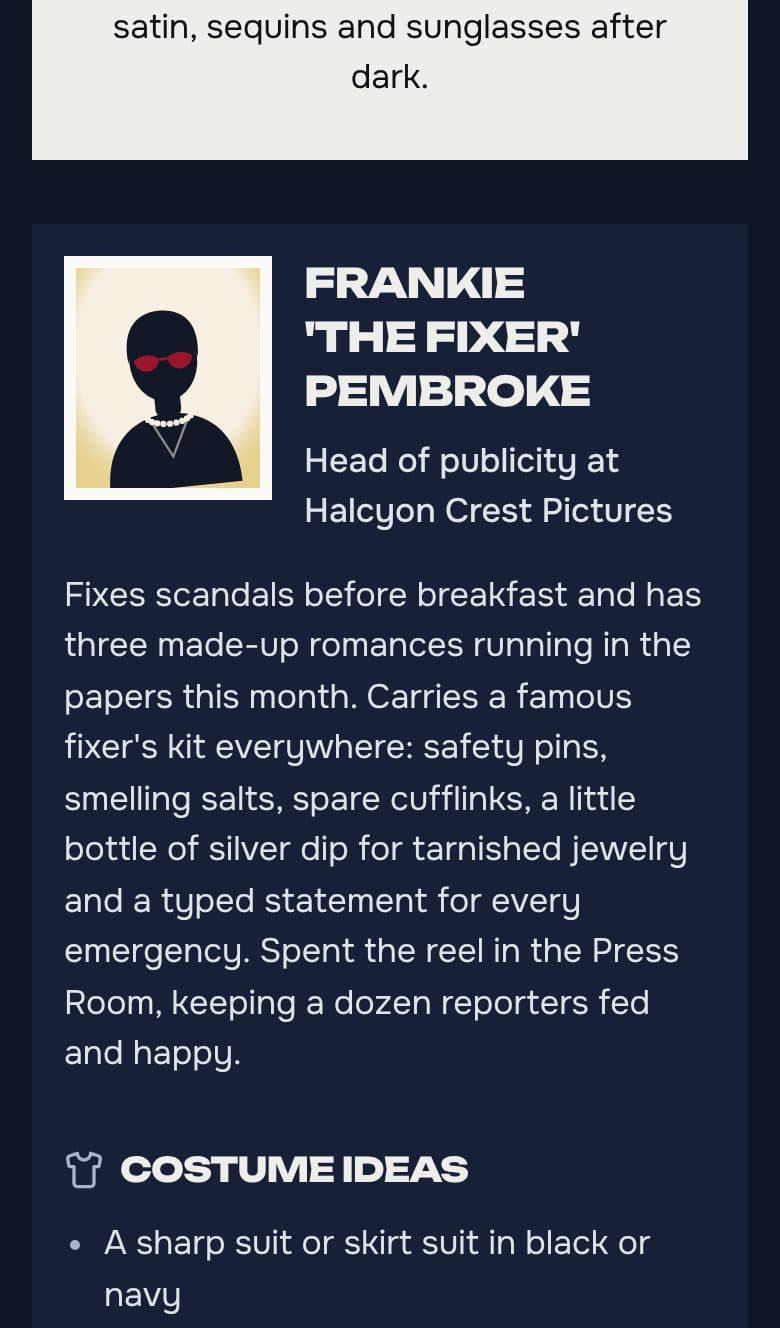
If you're using Killer Cast, each guest's private invite page includes costume ideas for their specific character, so even reluctant guests get one easy, concrete suggestion instead of a vague dress code.
- The one-item rule: a hat, scarf, tie or pin, and nothing else.
- Theme colors: all black for a haunted mansion, black and gold for a masquerade, denim for the Wild West.
- A name tag with a title (“Professor,” “Captain,” “Dame”) does a surprising amount of work.
- A prop instead of clothes: carrying a ledger or a spyglass all night reads as fully committed.
- A prop basket by the door with masks, hats and bandanas, so anyone can grab something on arrival.
Questions
Do guests have to wear costumes to a murder mystery party?
No. Costumes add to the fun, but the game works fine without them. Make them optional in the invitation and suggest a single accessory for anyone who would rather keep it simple.
Which murder mystery theme has the easiest costumes?
Wild West saloon and pirate ship are the easiest, since denim, plaid, a bandana or a striped shirt already count. Las Vegas casino night is close behind.
How much should a murder mystery costume cost?
Most guests can build a convincing costume for $10 to $15 by starting with their own closet and adding one thrifted or dollar-store piece.
When should guests get their costume ideas?
Five to ten days before the party, ideally with a weekend in between so guests have time to shop, swap or borrow.