Pick a theme people dress for
The theme sets the costumes, the menu, the music and half the jokes, so choose it for your crowd rather than for your own mood board. A quick test: could every guest pull together an outfit from their own closet plus one $10 purchase? If yes, you have a winner. If half the list would need to rent something, keep looking.
Match the theme to the season and the occasion. A Victorian Christmas manor practically decorates itself in December, and a haunted mansion owns October. A New Year's Eve masquerade gala gives everyone a reason to wear the sparkly thing already hanging in the closet. A Roaring Twenties speakeasy and a Las Vegas casino night work in any month and suit groups that love dressing up. A Wild West saloon and a pirate ship are the most forgiving for costume skeptics, because a bandana or a striped shirt counts. An Old Hollywood awards night is made for milestone birthdays, since the guest of honor gets a red carpet.
Then pick a tone. Classic plays it straight, with a real puzzle and a hint of menace. Comedy leans into ridiculous motives and big personalities. Spooky adds candlelight and creaking doors while staying PG-13. If your group mixes coworkers, in-laws and old friends, classic or comedy is the safer choice.
- Easiest costumes: Wild West saloon, pirate ship, Las Vegas casino night
- Dressiest: Old Hollywood awards night, New Year's Eve masquerade gala, Roaring Twenties speakeasy
- Seasonal picks: haunted mansion for Halloween, Victorian Christmas manor for December
The guest list: 6 to 20
Most murder mysteries play beautifully with 8 to 12 people. Six is a comfortable minimum: enough suspects that the answer isn't obvious, few enough that everyone gets plenty of airtime. Above 12, conversation naturally splits into smaller huddles, which is great fun but means you'll want louder round announcements and extra time for accusations. For 15 to 20 players, choose a longer game, around 150 minutes, so nobody feels rushed.
Aim for a mix of talkers and listeners. Two or three natural hams keep the energy up, and a few careful thinkers will actually crack the case. Shy guests are welcome: give them a character with a juicy secret rather than a long speech, and see our guide for shy players for more ideas.
Before you cast, collect one harmless fun fact per guest (a hobby, a signature dish, a favorite trip) plus a private “please avoid” note for topics that shouldn't come up. Skip anything about exes, health, money or appearance. The goal is in-jokes everyone laughs at, including the person they're about. Fun facts help you match people to roles even with a store-bought game.
Finally, decide whether you'll play or run the game. With most printed kits the host reads the solution ahead of time, so the host runs things. With a custom case where the answer stays hidden from you, you can play a suspect and be just as surprised as everyone else.
Invitations that explain it
Invitations have two jobs: build hype and make sure nobody arrives confused. Send them two to three weeks ahead, or four for December dates when calendars fill fast. Include the date, a firm arrival time (the opening scene needs everyone in the room), the address, the theme and dress code, an RSVP deadline about 10 days before the party, and one sentence explaining what a murder mystery party is.
That one sentence does a lot of work. Try: “Everyone plays a suspect, nobody has to act, and you'll get your character a week before.” It answers the three worries that make people hesitate: performing, memorizing and looking silly.
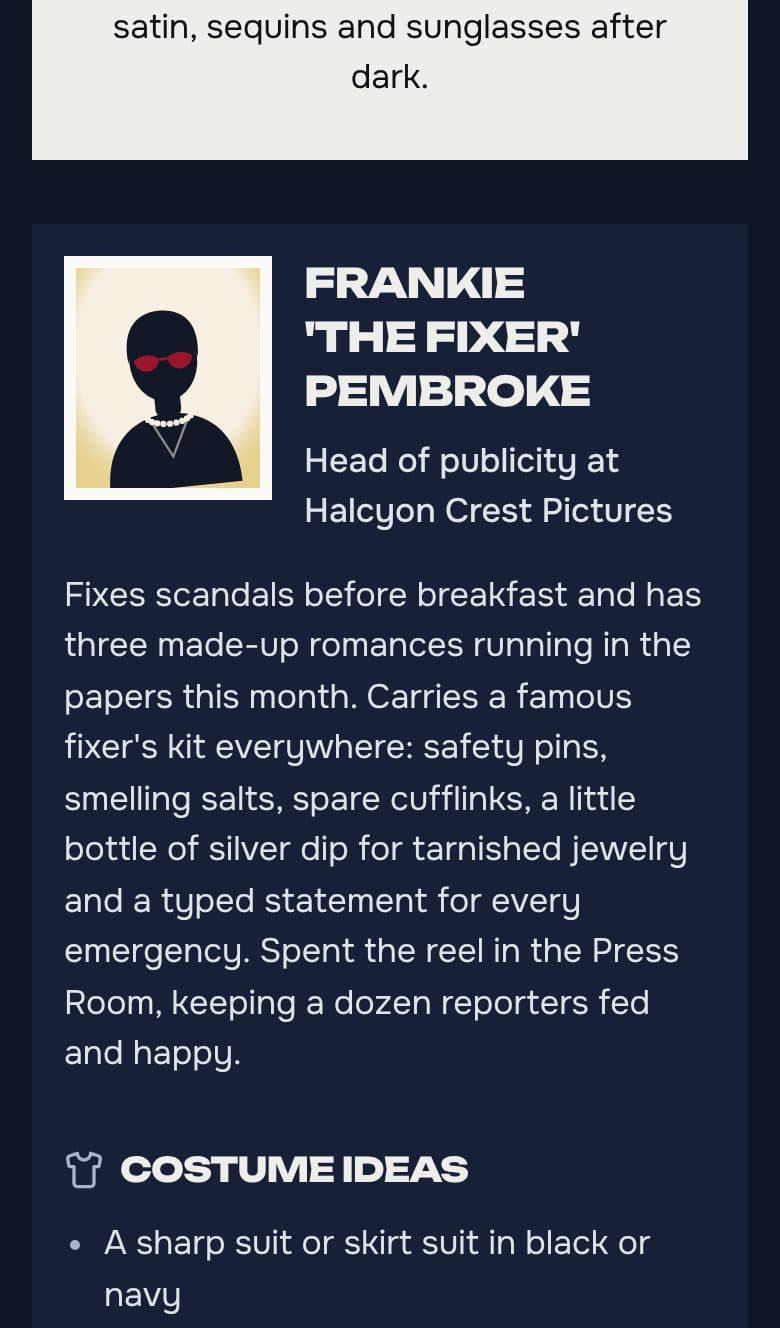
Send character details five to seven days before the party: a character name, a short public bio, costume ideas and anything to bring. Keep secrets sealed until the night so nobody compares notes in the group chat. If you use Killer Cast, each guest gets a private invite page with their character and costume ideas, plus an optional illustrated portrait made from their own selfie. For ready-to-copy wording in several tones, see our invitation wording guide.
Your three-week countdown
Most of the thinking happens in week one. After that, the to-do list is small tasks spread out, which is how you arrive at your own party with energy to spare. Copy this into your calendar and adjust the dates.
- 3 weeks out: pick the date, theme and game length (90, 120 or 150 minutes). Send invitations with an RSVP deadline.
- 2 weeks out: chase missing replies, lock the guest count and choose or create your case. Sketch the menu.
- 10 days out: send characters and costume ideas so guests get a full weekend to shop or raid their closets.
- 1 week out: buy decor and pantry items. Build a playlist about three hours long. Test the TV or speaker you plan to use.
- 3 days out: confirm with every guest by message. Print anything you need, such as name tags, place cards or clue cards. Start the make-ahead cooking.
- Party day, 3 hours before: set up the room, chill the drinks and lay out name tags.
- 1 hour before: run the opening on your screen once, lower the lights, start the music and get into costume.
Set up the room
Think in three zones. The main room is where announcements, accusations and the reveal happen, so every seat needs a view of the host's screen or earshot of the narrator. A food and drink station keeps people moving and mingling. A quiet corner or hallway gives players somewhere to whisper, which is where the best scheming happens.
Lighting matters more than decor. Swap two or three bright bulbs for warm lamps or battery candles (real flames and flowing sleeves are a bad mix), but keep enough light to read a clue card. Set the music low enough that people can talk over it without raising their voices.
Add one or two crime-scene touches and stop there: a masking-tape outline on the floor, an overturned chair, a toppled teacup by the bar. Put out name tags with character names, a pen and notepaper for every player, and a basket for phones if you want a heads-up feel between rounds.
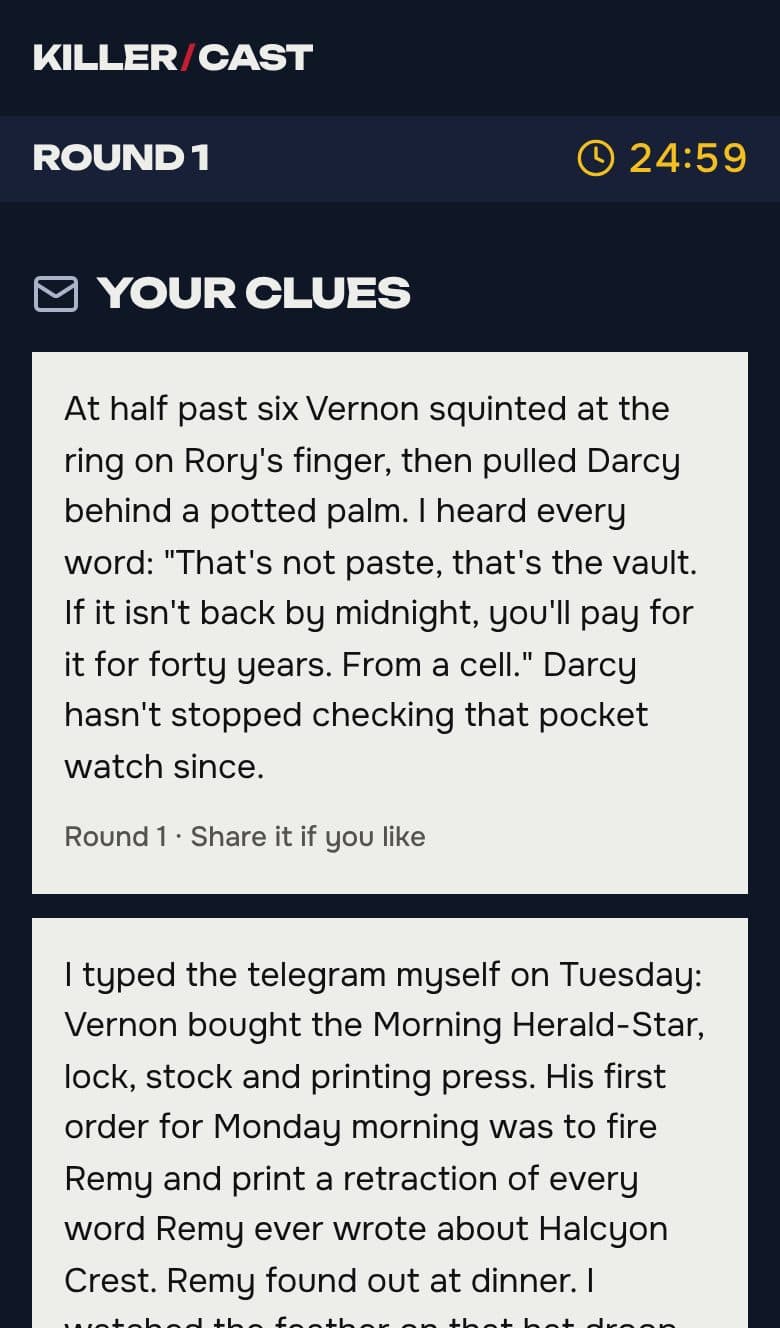
If clues will be digital, cast the host screen to the TV and test the volume from the far side of the room. Killer Cast plays narrator audio with captions from any TV, laptop or phone, and its interactive Evidence Locker unlocks letters, clippings, receipts and voicemails round by round. Nothing has to be printed unless you want the optional print-at-home kit.
Run the night, round by round
Here is a 120-minute evening from arrival to awards. For a 90-minute game, trim each round by five minutes and serve dinner buffet-style. For 150 minutes, add ten minutes to each round and linger over dessert.
Open each round with a short, clear announcement: “Round two is open. Check your new clues. You have 20 minutes.” People relax when they know what to do next. If a corner of the room goes quiet, nudge it in character: “Inspector, you were the last person seen with the victim. Care to explain?” Keep the spotlight playful and pass it around, and never make a joke about a guest's real life.
- Arrival and mingling, 20 minutes: drinks, costume compliments and introductions in character. Each guest shares a name, a role and one thing everybody knows about them.
- Opening scene, 5 minutes: lights down, the victim is discovered and the narrator or host sets the stakes.
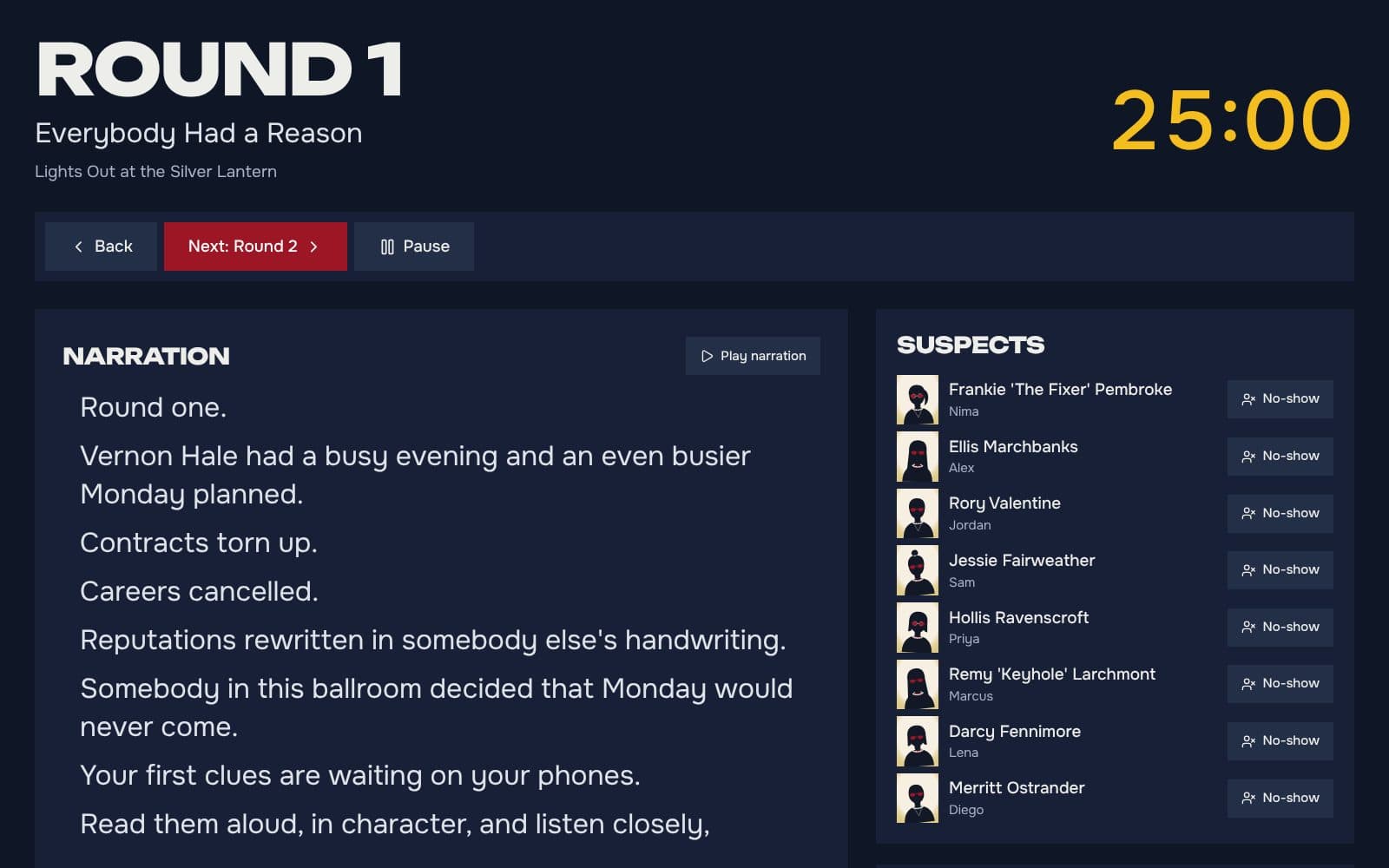
- Round one, 20 minutes: everyone reads their objectives and shares their opening clues. Questions focus on alibis: where was everyone at nine o'clock?
- Round two with dinner, 30 minutes: fresh clues and evidence. Motives surface, alliances form, and somebody gets caught in a small lie.
- Round three, 20 minutes: the last and most damning clues. Give a five-minute warning before it closes.
- Accusations, 10 minutes: every player names the killer, the motive and the method. Written guesses stop people from copying the loudest theory.
- Reveal and awards, 15 minutes: the solution, the trail of clues and a few awards.
No-shows and surprise guests
Someone will cancel, so plan for it. Make sure no single guest holds a clue the case can't be solved without, and know which one or two roles can disappear without breaking the plot. If a guest drops out several days ahead, recast the role or cut it. Killer Cast makes this easy: re-casting is free until 24 hours before the party, and every case keeps 2 standby characters ready for a surprise plus-one.
For a same-day no-show, read the missing character's must-share clues aloud at the right moment (“A note was found in the coat Sam left behind…”) or hand them to a player who could use more to do. Never quietly drop a clue; that's how a fair mystery turns unsolvable.
Late arrivals are easier. Give them a 60-second recap at the door, hand over their round-one clues and send them straight into the room. A dramatic in-character entrance turns lateness into a highlight. To keep it rare, set the arrival time 15 minutes before the opening scene and tell guests why: round one sets up everything that follows.
Stage the reveal
The reveal is the payoff, so give it a moment of theater. Collect every accusation before anyone says a word, then dim the lights, cut the music and gather everyone in one room. Read the tally first, how many votes each suspect got, because that alone draws gasps and protests.
Next, name the killer and invite them to explain themselves in character for a minute. Then walk through the clue chain: the three or four pieces of evidence that pointed to the answer. A fair mystery feels obvious in hindsight, and a chorus of “I knew it!” is the sound of a successful night.
Close with quick awards. Favorites include Best Performance, Super Sleuth for the sharpest accusation, and Most Suspicious for the innocent guest everyone accused. A dollar-store trophy or a printed certificate is plenty; the bragging rights are the real prize.
After the party
Take a group photo in costume before anyone changes. It's the picture everyone will ask for. Share it the next day along with the awards while the jokes are still fresh. With Killer Cast, a party recap with the cast, the solution and the awards keeps the story going in the group chat.
Then do the small stuff: thank anyone who brought food or helped set up, round up stray props, and write down what worked. Which guests carried scenes? Which dishes vanished? Did the timing drag anywhere? Hosts who pull off one murder mystery are usually asked for a sequel within a few months, and those notes make the next party even easier.
Questions
How long does a murder mystery party take?
Plan for about three hours in total. The game itself usually runs 90, 120 or 150 minutes from the opening scene to the reveal, plus 20 to 30 minutes of arrival time and a little time to wind down.
How many people do you need for a murder mystery party?
Six is a comfortable minimum and 8 to 12 is the sweet spot. Up to 20 works well with a longer game and clear announcements at the start of each round.
Can the host play too?
Yes, as long as the host doesn't know the solution. With most printed kits the host reads the answer in advance and runs the game. With a custom case like Killer Cast, the answer stays hidden, so the host can choose to play a suspect or run the game.
Do guests have to act or memorize lines?
No. Guests read their objectives, share their clues and ask questions. Accents and costumes are fun extras, not requirements, and character details can stay on a phone or a card all night.
How far ahead should I send invitations?
Two to three weeks ahead, or four for busy holiday dates. Send character details five to seven days before the party so guests have time to plan a costume.